

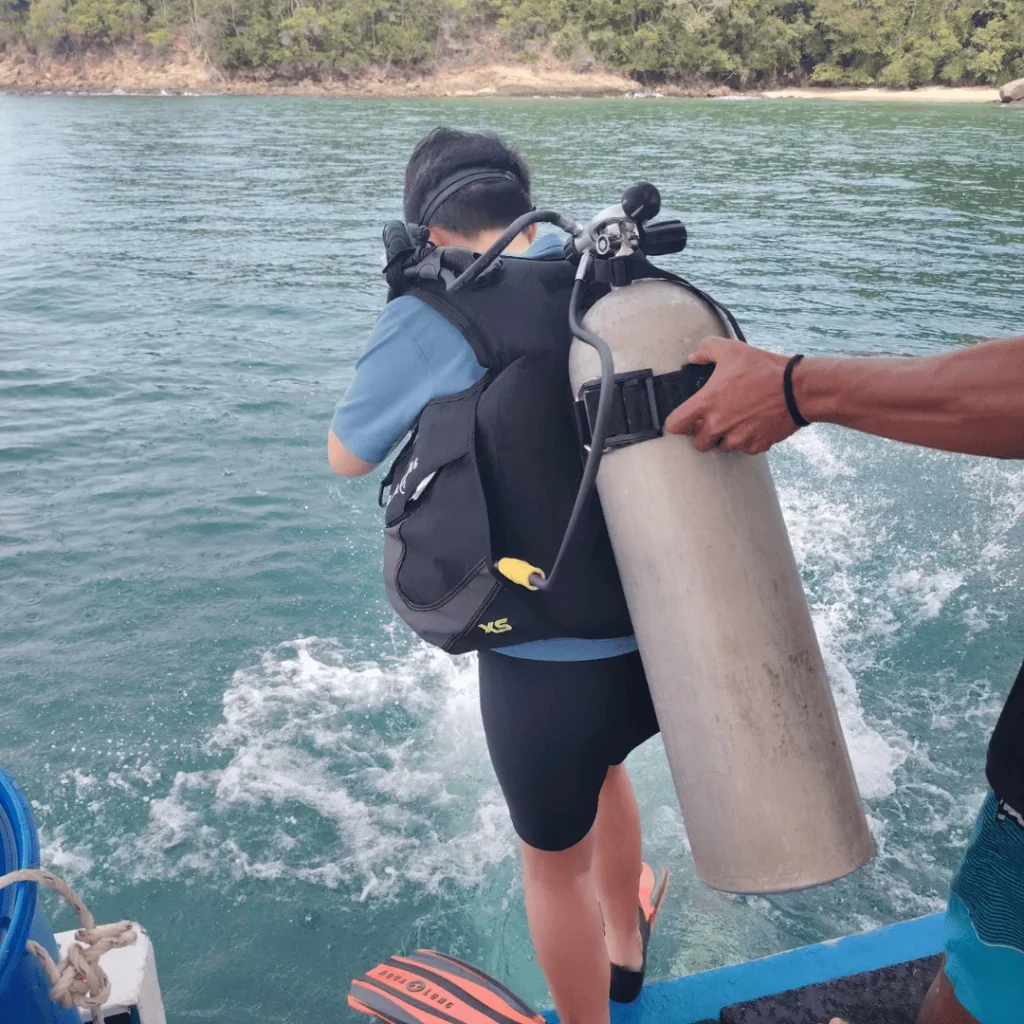
Off the eastern coast of Sabah, in the Celebes Sea near Semporna, sits a small island that divers from around the world travel thousands of miles just to see. Sipadan Island is often described as one of the best dive sites on the planet, and once you understand how it was formed and what lives around it, that reputation starts to make a lot of sense.
What makes Sipadan Island different
Sipadan is Malaysia’s only true oceanic island. Unlike most islands in the region, it isn’t connected to the continental shelf. It was built up over thousands of years by living coral growing on top of an extinct volcanic cone that rises roughly 600 metres from the floor of the Celebes Sea.
That underwater wall is the whole story here. Walk just a short distance from the beach and the seabed drops away into open water, creating a dramatic vertical reef that’s home to an extraordinary range of marine life.
The island itself is tiny, only about 12 to 13 hectares, and you can walk around it in under half an hour. There’s no accommodation on Sipadan and no restaurants either. Divers and snorkelers stay on nearby islands like Mabul or Kapalai, or in Semporna town, and travel to Sipadan by boat each day.
How Sipadan became famous
Sipadan was first gazetted as a bird sanctuary back in 1933, mainly to protect migratory species. Its transformation into a global diving destination came much later.
The island’s diving scene was largely discovered in the early 1980s, but it was French oceanographer Jacques Cousteau who put Sipadan on the world map. His 1989 documentary on the island’s marine life introduced international audiences to its coral walls and turtle population, and interest in diving there grew quickly from that point on.
Today, Sipadan Island Park is a fully protected marine conservation zone, and access is tightly controlled to keep the reef and its wildlife intact.
Stop scrolling and start traveling! City MPV Travel and Tours makes it easy to turn this into your next unforgettable trip. Seats fill fast, so grab yours today.
Book Your TourThe marine life that keeps people coming back
Sipadan is often called the turtle capital of the world, and it’s not an exaggeration. Green turtles and hawksbill turtles are a near-guaranteed sighting on almost every dive, often resting on ledges or gliding along the reef wall as if the divers aren’t even there.
Beyond turtles, the waters around Sipadan support thousands of fish species and hundreds of types of coral, a level of biodiversity tied to its location within the Coral Triangle, one of the richest marine ecosystems on Earth.
Depending on the season and a bit of luck, divers here might also come across schools of barracuda circling in tight formations, bumphead parrotfish, reef sharks, and occasionally hammerhead sharks in deeper water. There’s also Turtle Tomb, an underwater cave system that requires specific cave diving certification to explore safely.
Dive sites around the island
There are around a dozen named dive sites ringing Sipadan, each with its own character. Some are known for dramatic drop-offs and strong currents that attract pelagic fish, while others offer calmer coral gardens better suited to newer divers or snorkelers.
Because the reef wraps almost entirely around the island, dive operators can usually find a site that matches the day’s conditions and the group’s experience level, which is part of why Sipadan works well for both beginners and highly experienced divers.
Permits and how access works
Sipadan isn’t a place you can just show up to. Since it became a protected marine park, Sabah Parks has limited the number of divers allowed on the island each day to protect the reef from overuse.
Permits are issued to registered dive operators, and they get booked up quickly, especially during peak travel months. If diving or snorkeling at Sipadan is the main reason for your trip, it’s worth arranging permits well ahead of time through a licensed operator rather than trying to sort it out on arrival in Semporna.
Best time to visit
The most popular diving window runs from roughly February through November, when water visibility tends to be at its best, sometimes reaching 20 to 60 metres on a good day. Conditions can shift with the monsoon season, so it’s worth checking recent reports closer to your travel dates rather than relying on general averages.
Stop scrolling and start traveling! City MPV Travel and Tours makes it easy to turn this into your next unforgettable trip. Seats fill fast, so grab yours today.
Book Your TourGetting there
Most visitors fly into Tawau, which has the closest airport, then travel by road to Semporna, and finally by boat out to Sipadan or one of the neighboring islands where they’re staying. The full journey takes a few hours door to door, so it’s usually built into a multi-day Semporna itinerary rather than treated as a quick side trip.
Is Sipadan worth the effort
For anyone serious about diving, yes. Few places in the world combine this kind of wall diving, turtle density, and coral diversity in one location. Even travelers who aren’t certified divers can still snorkel around parts of the reef and get a sense of why this island has held onto its reputation for decades.
If a trip to Sabah is on your radar, Sipadan is one of those destinations worth building an itinerary around rather than squeezing in as an afterthought.