

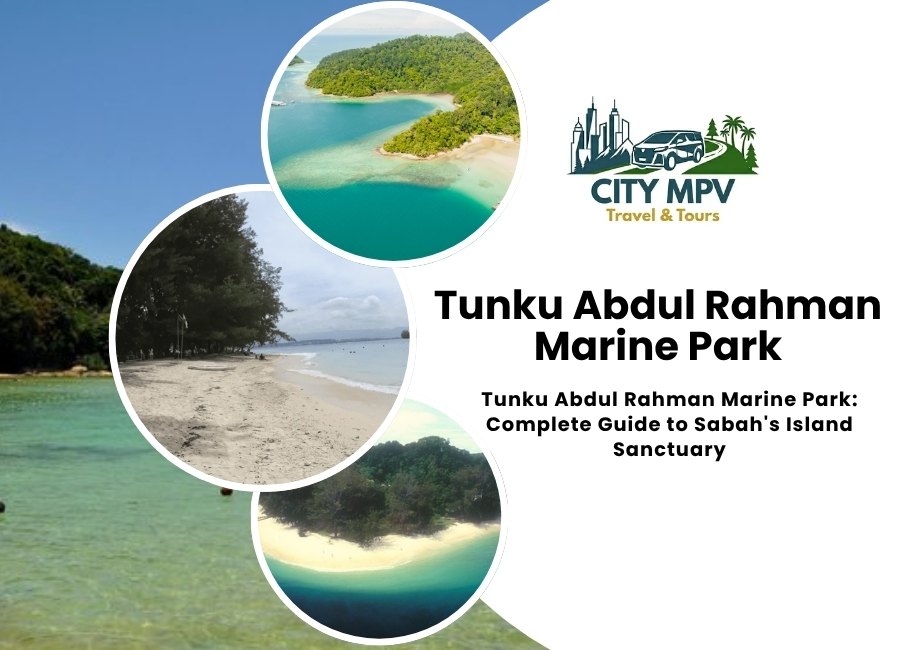
Few places in Southeast Asia offer what Tunku Abdul Rahman Marine Park delivers within 20 minutes of a city centre. A cluster of five islands, fringing coral reefs, and sea stretching across 50 square kilometres sits just offshore when traveling to Kota Kinabalu in Sabah, Malaysian Borneo. Locals simply call it “pulau” — the island. Visitors call it unforgettable.
This is not a remote wilderness that demands weeks of planning. Yet it holds the kind of biodiversity that marine biologists dedicate careers to studying. That tension between accessibility and ecological richness is exactly what makes Tunku Abdul Rahman Marine Park (TARP) one of the most important protected coastal zones in the Coral Triangle.
The History Behind the Name
The park was gazetted in 1974, making it Sabah’s second national park. It carries the name of Malaysia’s first Prime Minister, Tunku Abdul Rahman, whose conservation legacy extends well beyond political history.
Geologically, the islands were never truly separate from the mainland. They form part of the Crocker Range, the sandstone and sedimentary massif that runs through Sabah’s interior. When sea levels rose after the last Ice Age, the higher ground became islands, stranded peaks of an ancient mountain range now ringed by coral.
Sabah Parks, the governing authority, oversees the park under a mandate that balances ecological preservation with managed public access. This dual responsibility shapes everything from entry fee structures to the rules around anchoring near reef zones.
Five Islands, Five Personalities
The park is built around five islands. Each has its own character, its own reef system, and its own role within the broader protected area.
Pulau Gaya
Gaya is the largest island in the park, covering roughly 1,465 hectares. It holds 20 kilometres of jungle trails and two Five-Star resorts: Gayana Eco Resort and Bunga Raya Island Resort. The Gayana property is home to the Marine Ecology Research Centre (MERC), which runs coral propagation programmes, giant clam conservation, and public marine education, integrating scientific fieldwork with the resort’s eco-tourism model.
The island also hosts Sabah Parks’ administrative base on its southeastern shore. Downbelow Marine & Wildlife Adventures, one of the region’s respected dive operators, maintains a station there as well.
Pulau Manukan
Manukan is the park’s most developed and most visited island. Crescent-shaped, about 1.5 kilometres long, it holds the park’s main administrative centre and the only hotel-style accommodation run under Sutera Sanctuary Lodges. The best beach sits at the eastern tip, with productive snorkelling along the south and east coasts. It functions as the social hub of the park, busy, well-facilitated, and a reliable introduction to the reef ecosystem.
Pulau Mamutik
Mamutik is the smallest island in the group, but it consistently earns high marks from divers and snorkellers for the quality of its surrounding reef. Facilities are deliberately minimal: rest houses, changing rooms, barbecue pits, and fresh water. This restraint is part of the appeal. Mamutik offers the closest thing to a genuine desert-island experience within the park’s boundaries.
Pulau Sapi
Sapi sits southwest of Gaya and is widely regarded as home to some of the park’s finest beaches. It also holds one notable distinction, a zipline connecting it to Gaya Island, making it a draw for visitors who want a little adrenaline with their snorkelling. Basic facilities are in place, and the coral around Sapi remains active and colourful.
Pulau Sulug
Sulug is the most remote and least developed of the five. Access is currently restricted to the public, allowing its surrounding reef and forested interior to remain largely undisturbed. Its presence in the park serves more of a conservation function than a recreational one.
Marine Life: What Lives Below the Surface
The waters of TARP sit within the Coral Triangle, one of the most biodiverse marine regions on Earth. That geographic context matters. The park harbours over 573 species of fish and at least 148 species of hard coral, according to monitoring data referenced in studies from Universiti Malaysia Sabah’s Borneo Marine Research Institute (BMRI).
Hard corals form the structural foundation of the reef, building the limestone frameworks that shelter fish, crustaceans, nudibranchs, and invertebrates. The park’s waters also support soft corals, including gorgonians or sea fans, which grow in the larger formations and are notable for the chemical compounds they secrete to prevent encrusting growth compounds that have attracted the attention of cancer research scientists.
Echinoderms are well represented across the reef zones. Sea stars, brittle stars, featherstars, sea urchins, and sea cucumbers each occupy specific ecological niches. Marine worms, molluscs, and cephalopods complete a reef community that rewards patient observation.
One scientific finding worth noting: research conducted by BMRI during the 2020 Movement Control Order period showed a measurable increase in coral cover at TARP when human activity was absent for four months. The study, published in the Malaysian Journal of Sustainable Development, attributed this recovery to the sudden reduction in tourist-related pressure. It is not a case against tourism; it is a case for managed, sustainable access.
The Conservation Pressure
Rapid urbanisation along Kota Kinabalu’s coastline has placed ongoing stress on the fringing reefs of TARP. Research published in the journal Community Ecology assessed coral diversity and abundance across 27 reef sites within and around the park boundary. The findings point to increased sedimentation, pollution, and habitat degradation driven by coastal development and elevated visitor numbers.
The park received over half a million tourists in 2019 alone. Managing that volume while protecting reef integrity is the central challenge for Sabah Parks and the research institutions working within the park’s boundaries.
The Marine Ecology Research Centre on Gaya Island Kota Kinabalu directly addresses this through coral propagation and transplantation, giant clam breeding, a species classified as endangered, and biodiversity monitoring that feeds into broader conservation planning.
Getting to the Park
The sole public access point is Jesselton Point Ferry Terminal in central Kota Kinabalu. Boats depart regularly throughout the day, with the first services typically leaving around 7:30 to 8:00 AM. The last return boats from the islands leave around 5:00 PM, so keeping that deadline in mind is essential.
The nearest island, Mamutik, takes roughly 15 minutes by speedboat. Sulug, the furthest, is about an hour out.
There is no fixed ferry timetable in the traditional sense. Boats depart when they fill — typically around 12 passengers. Arriving before 8:30 AM is advisable, particularly if you plan to visit more than two islands in a single day. Arriving after 11:00 AM leaves limited time for multi-island exploration.
An alternative departure point is Sutera Harbour, primarily used by guests staying at nearby properties.
Island-hopping packages are sold at numbered booths inside the ferry terminal building. Prices were updated in 2025, with one-island trips priced at RM 45 for adults and four-island packages at RM 75. The park conservation entry fee is separate, RM 5 for Malaysian adults, RM 25 for international visitors, and covers access to all five islands on the same day.
Always use licensed operators at Jesselton Point. Unlicensed boats operating from other departure points around the city carry genuine risks and have been associated with serious incidents.
What to Do in the Park
Snorkelling and Scuba Diving The reef zones around Mamutik, Sapi, and Gaya offer the most reliable underwater encounters. PADI courses and guided dive experiences are available through operators based both at the terminal and on the islands. Visibility is best during the dry season.
Island Hopping: Moving between islands in a single day is the most popular format. Most visitors combine two or three islands, a beach stop, a snorkelling site, and a quieter retreat into a full-day itinerary.
Jungle Trekking Gaya Island’s trail network runs approximately 20 kilometres. The base camp area near the Sabah Parks office serves as the starting point for most routes. Plank walkways through marsh jungle sections keep the trails navigable even during wetter periods.
Water Sports Jet skiing, parasailing, and kayaking are readily available at the more developed islands. These are managed through operators at the beach level.
Marine Conservation Participation Through MERC and affiliated dive operators, visitors can take part in coral survey work, data collection, and turtle monitoring. This is particularly relevant for school groups and for travellers interested in structured conservation engagement rather than passive recreation.
Best Time to Visit
The dry season runs from March to September, when seas are calmer and underwater visibility reaches its best. This is the most reliable window for snorkelling and diving.
December to March also brings relatively clear skies and calm water — these months are considered peak season, meaning more visitors and higher accommodation demand.
The monsoon season runs from November through February. Rain is more frequent during this period, and sea conditions can become rough enough to affect smaller boat operators. The park remains open year-round, but scheduling during the wet season requires some flexibility.
Year-round temperatures stay between 23.8 and 29.4 degrees Celsius, with high humidity throughout.
Where to Stay
Accommodation within the park ranges across a significant spectrum.
At the luxury end, Gaya Island Resort (developed by YTL Hotels), Bunga Raya Island Resort, and Gayana Eco Resort all sit on Gaya Island. Each integrates some form of environmental programming into the guest experience. Gayana hosts the Marine Ecology Research Centre directly on its grounds.
Manukan Island Resort, operated by Sutera Sanctuary Lodges, provides hotel-style accommodation for visitors who want an overnight experience without the Five-Star price point.
Sabah Parks operates campsites on Mamutik, Manukan, and Sapi Island snorkeling for those who prefer a more stripped-back stay within the park.
Practical Notes Before You Go
The park is open daily from 8:00 AM to 5:00 PM. A single conservation fee covers all five islands on the same day; there is no need to pay again when moving between islands.
Entry is free for visitors with disabilities. Senior Malaysian citizens aged 60 and above also receive free entry.
Snorkelling equipment can be rented at the islands if you do not bring your own. Sunscreen matters here. Conventional chemical sunscreens contribute to coral bleaching and are increasingly restricted around sensitive marine zones.
If you are susceptible to seasickness, the speedboats used during peak times can be rough in open water. Taking motion sickness medication before boarding is a practical precaution.
Why This Place Matters
Tunku Abdul Rahman Marine Park is not simply a day trip. It is one of a small number of urban-adjacent marine protected areas in Southeast Asia where meaningful reef ecology still exists within sight of a city skyline. The Coral Triangle designation means the waters here connect to one of the planet’s most critical reservoirs of marine genetic diversity.
The decisions made about how many visitors enter each day, how close boats anchor to reef formations, and how conservation revenue is reinvested will determine what the reef looks like in twenty years.
Visiting with that awareness, choosing operators who invest in conservation like City MPV Travel & Tours, and following the rules around reef interaction is not virtue signalling. It is the basic cost of keeping this place worth visiting.