

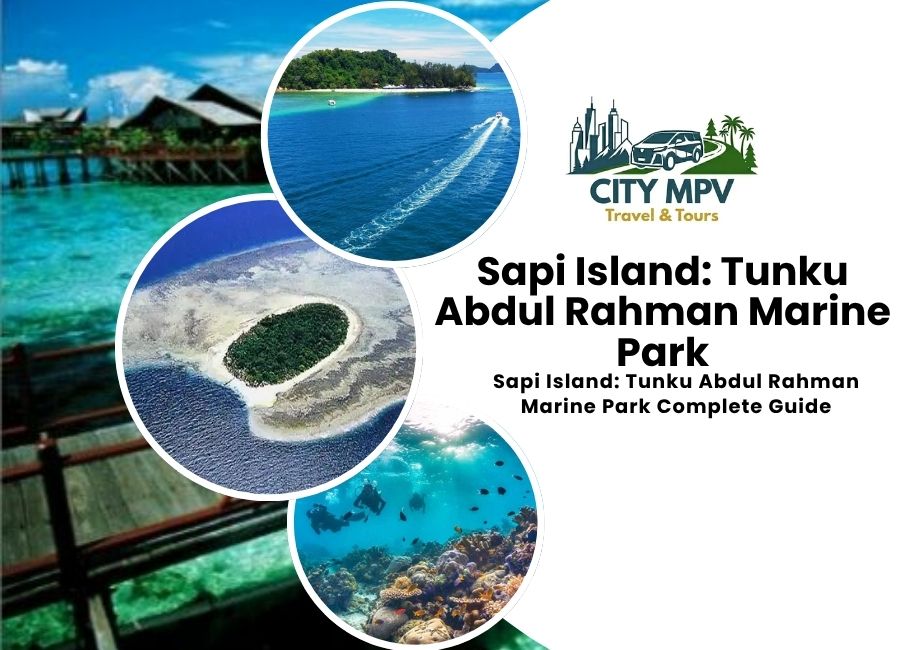
Just a short boat ride from Kota Kinabalu sits one of Sabah’s most visited stretches of coastline. Sapi Island, known locally as Pulau Sapi, is part of Tunku Abdul Rahman Marine Park, a cluster of five islands that has drawn beach lovers, snorkelers, and day trippers for decades. Despite being one of the smallest islands in the park, Sapi consistently ranks as a top pick among visitors, and once you see the water there, it’s easy to understand why.
Where Sapi Island Fits Into Tunku Abdul Rahman Marine Park
Tunku Abdul Rahman Marine Park was gazetted in 1974 and named after Malaysia’s first prime minister. It covers roughly 50 square kilometers of sea and shoreline just off Kota Kinabalu, and it includes five islands: Gaya, Manukan, Mamutik, Sulug, and Sapi.
Each island has its own character. Gaya is the largest and most forested. Manukan is the most developed, with the park’s headquarters and the longest beach. Mamutik is smaller and popular with new divers because of its calm, shallow water. Sulug sees the fewest visitors and feels the most untouched. Sapi sits in between these extremes, small enough to explore in a few hours but developed enough to offer proper facilities, making it a comfortable introduction to the marine park for first-time visitors.
Stop scrolling and start traveling! City MPV Travel and Tours makes it easy to turn this into your next unforgettable trip. Seats fill fast, so grab yours today.
Book Your TourThe name Sapi means “cow” in Malay, and one local explanation for the name is that the island’s outline resembles a cow’s head when viewed from certain angles on the water.
Getting to Sapi Island
Boats leave from Jesselton Point in Kota Kinabalu, and the crossing takes around fifteen to twenty minutes depending on sea conditions. Most operators run services from early morning until early afternoon, with the last boats returning to the mainland by late afternoon.
Because Sapi sits close to Gaya Island, many tour operators combine the two, and a zipline connects them directly over the water, letting visitors cross between islands without a boat.
Things to Do on Sapi Island
Snorkeling is the main draw. The reef sits close to shore, so even inexperienced swimmers can see coral formations and reef fish without venturing far into open water. Parrotfish and other reef species are common sightings, and on quieter mornings it’s possible to spot green or hawksbill turtles feeding near the coral.
Beyond the water, Sapi has a short jungle trail that loops through the island’s interior. It’s an easy walk, but it offers a break from the beach crowds and a chance to see the island’s forest cover up close. Long-tailed macaques live in this interior forest and often come down toward the shoreline, so visitors are usually advised to keep food secured and avoid feeding them.
For those wanting more activity, many tour packages add water sports such as parasailing, banana boat rides, or the Coral Flyer zipline connecting Sapi to Gaya, one of the longer island-to-island ziplines in the region.
Facilities on the Island
Sapi has a jetty, a small restaurant, snack kiosks, changing rooms, and toilets. Snorkeling gear can usually be rented near the jetty, along with lockers for valuables. Because the island is compact, none of these facilities are far from the beachs, which makes it manageable for families and older travelers.
Best Time to Visit
The park sees its busiest months between June and August, when boat queues and beach crowds are at their peak. Visiting earlier in the day, ideally on the first boats out, tends to mean calmer water and better snorkeling visibility before the afternoon crowds and boat traffic stir up the shallows.
Conservation and Etiquette
Because Sapi sits inside a protected marine park, certain rules apply. Anchoring and fishing are restricted in designated zones, and visitors are encouraged to use reef-safe sunscreen to avoid damaging the coral. Wildlife should never be fed, both for the animals’ health and for visitor safety, since the macaques in particular can become bold around food.
Bringing water shoes is a practical tip too. The shoreline near the reef can be rocky in places, and reef-safe footwear helps protect both your feet and the coral bed beneath the water.
Sapi Island Quick Facts
| Detail | Information |
|---|---|
| Distance from Kota Kinabalu | About 7 km by sea |
| Boat Ride | Around 15–20 minutes from Jesselton Point |
| Recommended Visit Time | 3–5 hours |
| Best Time to Arrive | Early morning, around 8:00–9:00 AM |
| Typical Island-Hopping Cost | Around RM100–RM200 per person, depending on the package |
| Park / Conservation Fee | Additional fees may apply depending on visitor status and current regulations |
| Best For | Snorkeling, swimming, beaches, jungle walks, and island hopping |
| Suggested Combination | Sapi Island + Manukan Island |
Visiting as Part of a Larger Trip
Many visitors pair Sapi with Manukan Island on the same day, since both are close together and offer different strengths, Manukan for its longer beach and Sapi for its reef and jungle trail. Full-day island hopping tours from Kota Kinabalu typically combine boat transfers, snorkeling gear, and lunch, which makes the logistics simple for anyone unfamiliar with the local ferry system or ticket counters.
If you’re planning a Sabah itinerary and want the island-hopping portion handled without arranging boats and tickets separately, City MPV Travel and Tours runs guided day trips to Sapi and Manukan that include transfers, snorkeling equipment, and lunch, which takes care of the coordination so the day is spent on the water rather than at the jetty counter.
Stop scrolling and start traveling! City MPV Travel and Tours makes it easy to turn this into your next unforgettable trip. Seats fill fast, so grab yours today.
Book Your Tour