

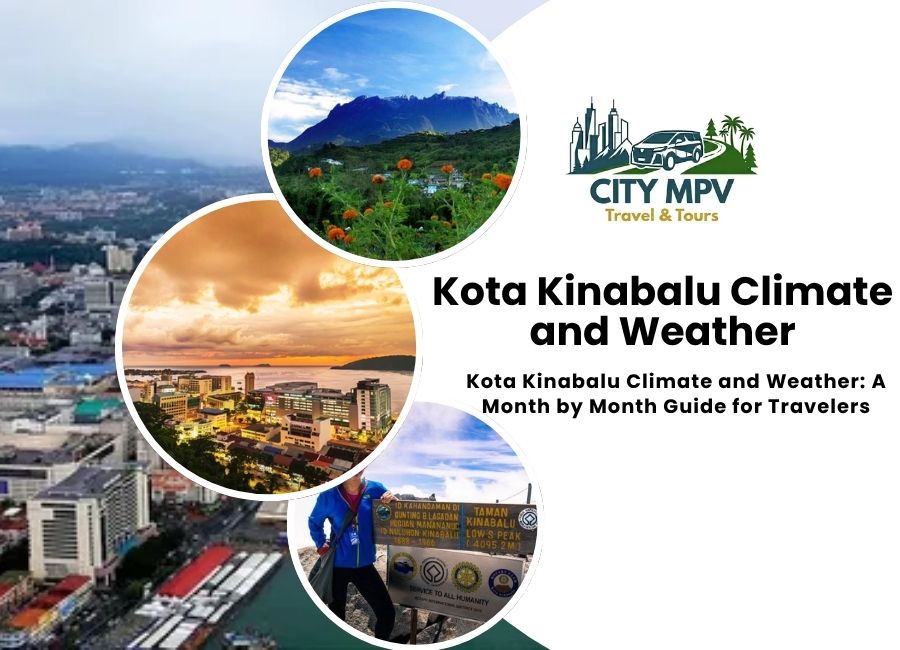
Kota Kinabalu sits just six degrees north of the equator, and its weather reflects that location closely. The city has a tropical rainforest climate, classified as Af under the Köppen system. That means warm temperatures, high humidity, and rain that can show up in any month of the year.
If you’re planning a trip to Sabah, understanding this climate pattern helps you pack right, pick the best travel window, and know what to expect from island hopping, jungle treks, or a climb to Mount Kinabalu.
Temperature in Kota Kinabalu stays remarkably steady
Unlike destinations with four distinct seasons, Kota Kinabalu barely shifts in temperature across the year. Daytime highs generally sit between 29°C and 32°C, while nighttime lows hover around 23°C to 24°C.
May tends to be the warmest month, with temperatures occasionally touching 32°C to 33°C. January is usually the coolest, though “cool” here still means a comfortable 25°C to 26°C on average.
This consistency is one of the biggest draws for tourism in Kota Kinabalu. There’s no need to time your trip around temperature swings. Humidity, not heat, is the bigger factor to plan for. Relative humidity often sits between 80% and 90%, so the air feels warmer than the thermometer suggests.
Stop scrolling and start traveling! City MPV Travel and Tours makes it easy to turn this into your next unforgettable trip. Seats fill fast, so grab yours today.
Book Your TourTwo monsoons shape the wet and dry seasons
Sabah’s weather is driven by two monsoon systems that alternate through the year.
The Northeast Monsoon runs roughly from November to March. It brings more rain to Sabah’s east coast, while Kota Kinabalu on the west coast usually sees a lighter effect, with February and March often turning out to be the driest stretch of the year.
The Southwest Monsoon runs from around May to September. This is when the west coast, including Kota Kinabalu, tends to pick up more rainfall, along with warmer, more humid afternoons.
Between these two systems are short transitional periods in April and October, when weather can be unpredictable and rain patterns shift quickly.
Annual rainfall in Kota Kinabalu averages somewhere between 2,500mm and 2,800mm, spread across roughly 150 to 200 rainy days a year. Even in the driest months, some rain is normal. The difference lies in frequency and intensity, not a true dry spell like you’d find in a desert or Mediterranean climate.
What weather actually feels like day to day
Most days in Kota Kinabalu follow a familiar rhythm. Mornings start warm and mostly clear. Humidity builds through the day, and by late afternoon, short but heavy tropical showers often roll in, especially during the Southwest Monsoon months.
These showers rarely last more than an hour or two. Locals plan around them rather than avoid travel altogether. It’s common to see clear skies again within the same afternoon.
Coastal breezes help take the edge off the heat near the waterfront and on the islands of Tunku Abdul Rahman Marine Park. Inland and at higher elevations, conditions change fast.
Mount Kinabalu has its own microclimate
Weather at sea level tells only part of the story if you’re climbing Mount Kinabalu, then you must be read our page Tips to Climbe Mount Kinabalu. As elevation increases, temperatures drop sharply. Near the summit, at over 4,000 metres, nighttime temperatures can fall close to freezing, a stark contrast to the tropical heat down in the city.
Climbers should prepare for both extremes in a single trip. Light, breathable clothing works for Kota Kinabalu itself, but layers and proper insulation are essential higher up the mountain.
Stop scrolling and start traveling! City MPV Travel and Tours makes it easy to turn this into your next unforgettable trip. Seats fill fast, so grab yours today.
Book Your TourBest time to visit Kota Kinabalu based on climate
For most travelers, the stretch from February to April lines up with the calmest weather. Rainfall tends to be lower, seas are generally calmer for island hopping and snorkeling trips, and mountain views are clearer for climbers.
June through August also works well for many visitors, since afternoon showers are usually brief and skies clear quickly.
October through January brings a higher chance of rain and rougher seas on the west coast, though this isn’t a reason to avoid the trip entirely. Prices are often lower and affordable, tourist sites are quieter, and the tropical climate here rarely produces the kind of prolonged washout you’d see in a true monsoon-heavy region like parts of Sarawak.
Packing and planning around Sabah’s weather
A few practical points make a real difference:
- Pack light, quick-dry clothing along with one rain jacket or poncho for sudden showers.
- Sunscreen matters year round. UV levels stay high even on cloudy days this close to the equator.
- Bring layers if Mount Kinabalu is part of your itinerary, since summit temperatures behave nothing like the coast.
- Book outdoor activities like island tours or river cruises for the morning, when skies are usually clearer and seas calmer before afternoon rain sets in.
Since local weather can shift quickly between coast and highlands, working with a local operator who understands these patterns is genuinely useful. City MPV Travel and Tours plans its Mount Kinabalu climbing pckeges, island hopping trips, and cultural tours around these seasonal shifts, which helps visitors avoid the worst of the rain windows without missing out on activities.
The bottom line on Kota Kinabalu’s climate
Kota Kinabalu offers warm, humid, tropical weather all year, with temperature staying fairly constant and rainfall shifting based on the Northeast and Southwest Monsoon cycles. There’s no bad season here in an absolute sense, just seasons better suited to certain activities. Knowing when the rain tends to fall, and how the mountain’s weather differs from the coast, makes it much easier to plan a trip that works around Sabah’s climate instead of being surprised by it.