

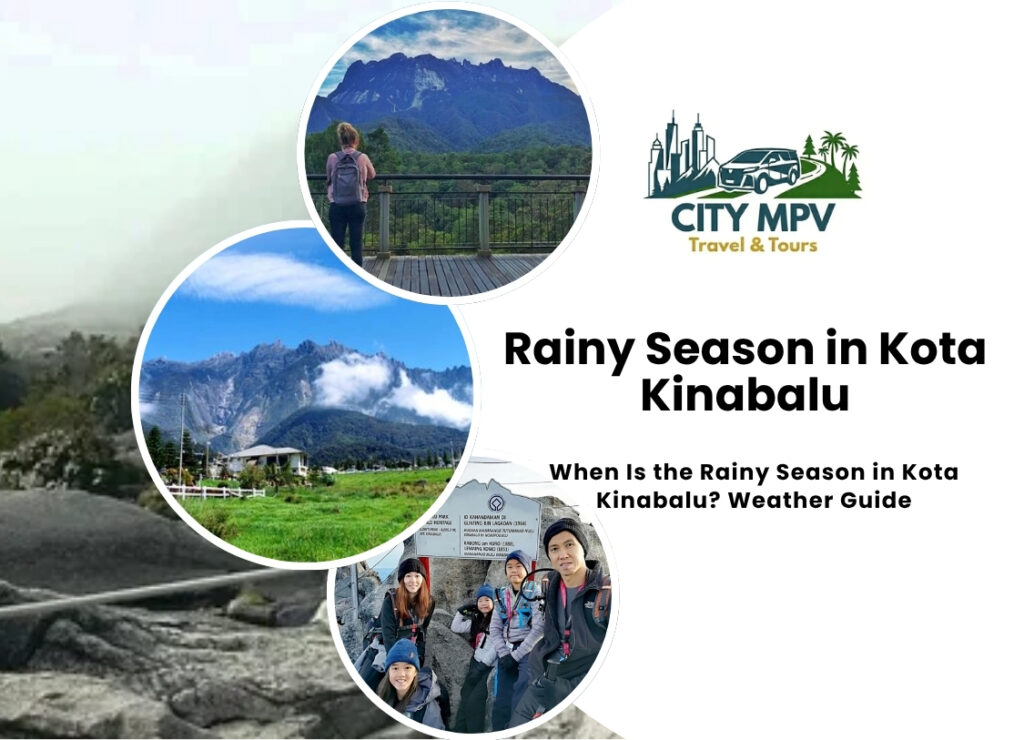
If you’re wondering when the rainy season in Kota Kinabalu starts, the answer is a little more complicated than simply picking a few wet months. Kota Kinabalu has a tropical climate, so rain can occur at any time of year. However, some months are noticeably wetter than others, with October through January generally bringing the most frequent and heaviest rainfall. Understanding the weather by month can help you choose the right time for island hopping, sightseeing, Mount Kinabalu trips, and other outdoor activities.
Stop scrolling and start traveling! City MPV Travel and Tours makes it easy to turn this into your next unforgettable trip. Seats fill fast, so grab yours today.
Book Your TourThe wetter half of the year in Kota Kinabalu runs roughly from October through January, with November often bringing the heaviest rainfall of any month. Rain becomes noticeably lighter from February through April, which is why this stretch is usually called the dry season, even though showers still turn up from time to time. May through September sits in between, with regular afternoon rain that rarely lasts long.
Kota Kinabalu Rainy Season at a Glance
- Wettest period: October to January
- Wettest month: November
- Driest period: February to April
- Most manageable rainy period: May to September
- Typical rain pattern: Short, heavy showers rather than all day rain
- Best strategy: Plan outdoor activities in the morning and keep afternoons flexible
Why Kota Kinabalu has a rainy season at all
The pattern comes down to two monsoon systems that pass over Sabah each year. The Southwest Monsoon runs from around May to September and brings moderate, fairly predictable afternoon showers. The Northeast Monsoon follows from November into March and tends to push more moisture toward the west coast of Borneo, which is why Kota Kinabalu sees its heaviest rain in the last quarter of the year rather than the middle. This seasonal pattern is important when considering what is the best time to visit Kota Kinabalu, especially if you want drier weather for sightseeing, island trips, and outdoor activities.

Local geography plays a part too. Mount Kinabalu and the ranges behind the city pull moisture out of the clouds as they roll in from the South China Sea, which is part of why the coastal city can be sunny in the morning and pouring by mid afternoon. For travelers planning a Kota Kinabalu trip, factors such as rainfall, humidity, sunshine hours, sea conditions, and the best months for outdoor activities can all influence the ideal time to visit.
Kota Kinabalu Weather by Month: What to Expect
January still carries some leftover rain from the Northeast Monsoon, though it tapers off as the month goes on. February and March are the driest stretch of the year, with some of the lowest rainfall totals and the most sunshine hours, which is why this window gets recommended so often for outdoor plans.
April and May start to warm up and bring in slightly more rain, marking the shift toward the Southwest Monsoon. June through September settle into a steady rhythm of clear mornings and short, heavy downpours in the afternoon or evening. This is often described as the most livable stretch of the rainy season, since the rain rarely disrupts a full day.
October marks the real turn. Rainfall climbs sharply, and by November the region is usually seeing its wettest days of the year, with rain that can last longer and arrive with less warning. December carries a similar pattern before things begin easing again in January.
Can you climb Mount Kinabalu during the rainy season?
Yes, Mount Kinabalu can still be climbed during wetter months, but conditions can be more challenging. Trails may become muddy and slippery, while clouds and rain can reduce visibility near the higher sections. Anyone planning the climb should check current trail conditions, follow guide instructions, and bring suitable waterproof clothing.
For a detailed breakdown of the different routes and what each involves, see our guide to Mount Kinabalu Climbing Routes.
Does rainy season mean a ruined trip
Not really, and this is where a lot of nervous travelers overthink things. Even in the wettest months, rain in Kota Kinabalu tends to arrive in bursts rather than settling in for the whole day. A common pattern is a bright morning, an hour or two of heavy rain in the afternoon, and clear skies again by evening. Plenty of visitors plan around this simply by scheduling outdoor activities for the morning and keeping afternoons flexible.
There are trade offs worth knowing about, though. Island hopping trips to places like Tunku Abdul Rahman Marine Park can get cancelled on days when the sea turns rough, which happens more often during the Northeast Monsoon months. Mount Kinabalu climbs are still possible in the rainy season, but the Mount Kinabalu Climbing Routes can become slippery, with muddy trails, reduced visibility, and wetter conditions near the summit. Anyone planning a climb during this period should check trail conditions, pack waterproof gear, and have realistic expectations about weather and mountain safety.
On the upside, the rainy months bring fuller waterfalls, greener rainforest, and noticeably fewer crowds at popular spots. Hotel rates also tend to soften outside the peak dry season window, which makes October through January a reasonable choice for travelers who don’t mind adjusting their plans around the weather rather than fighting it.
What is the best time to visit Kota Kinabalu?
For the driest and most reliable weather, February through April is generally the easiest period for outdoor activities, island hopping, and sightseeing. If you’re wondering best time to visit Kota Kinabalu, this period is usually the safest choice for travelers who want more dependable conditions. May through September can also work well if you don’t mind short afternoon showers and want a balance between good weather and fewer weather related disruptions.
October through January is better suited to travelers who are comfortable with unpredictable rain. November is usually the wettest month, so boat trips and mountain activities may require more flexibility. The upside is greener scenery, fuller waterfalls, fewer crowds, and potentially lower accommodation prices.
Packing and planning around the rain
A light rain jacket or a compact umbrella covers most situations, since downpours are usually short. Quick dry clothing is worth packing if the itinerary includes hiking or island visits, and waterproof bags or dry sacks are useful for anyone carrying a phone or camera on a boat. Building a buffer day or two into the schedule helps absorb any activity that needs to be rescheduled because of weather.
Getting around the city and to nearby attractions is a lot easier with private transport during this period, since sudden rain can make waiting for public transport or walking between stops far less comfortable. City MPV Travel and Tours runs airport transfers and day tour bookings that can be adjusted around the weather, which takes some of the guesswork out of planning a Kota Kinabalu trip during the wetter months.
Frequently Asked Questions
What months are rainy season in Kota Kinabalu?
October through January are generally the wetter months, with November often being the wettest.
Does it rain all day in Kota Kinabalu?
Usually not. Rain often arrives as short but heavy showers, with periods of sunshine before or after the rain.
What is the driest month in Kota Kinabalu?
February through April are generally the driest part of the year, although occasional showers can still occur.
Is November a good time to visit Kota Kinabalu?
November can still be a good time to visit if you are comfortable with rain and have a flexible itinerary. However, outdoor and boat activities may be more weather dependent.
Can you visit Kota Kinabalu during the rainy season?
Yes. Rainy season does not mean that the entire trip will be wet. Flexible planning can allow you to enjoy sightseeing, food, shopping, and outdoor activities around the showers.
Does rain affect island hopping in Kota Kinabalu?
Yes. Rough sea conditions can cause boat trips to be delayed or cancelled, particularly during periods of heavier weather.
What should I pack for Kota Kinabalu during the rainy season?
A lightweight rain jacket, compact umbrella, quick dry clothing, waterproof bags, comfortable footwear, and protection for your phone or camera are useful additions to your luggage.
Summary
Kota Kinabalu doesn’t really have a single rainy season so much as a sliding scale of wet and less wet months. October to January is the clearest stretch to call rainy, with November usually standing out as the peak. February to April is the driest window, and the months in between offer a fairly manageable middle ground. None of this needs to rule out a visit at any time of year, it just changes what kind of trip to plan for.
Stop scrolling and start traveling! City MPV Travel and Tours makes it easy to turn this into your next unforgettable trip. Seats fill fast, so grab yours today.
Book Your Tour