

Mount Kinabalu is the tallest mountain in Malaysia and one of the most recognisable peaks in Southeast Asia. Standing at 4,095.2 metres, Low’s Peak has pulled in climbers from every corner of the world for decades.
Part of the appeal is that you don’t need technical climbing skills to reach the top. Part of the challenge is that altitude, distance, and early morning cold catch a lot of first-timers off guard.
This guide covers everything you need to know before climbing Mount Kinabalu, from age rules and fitness prep to what to pack and how solo climbers should plan.
What Makes Mount Kinabalu Different From a Normal Hike
Kinabalu Park is a UNESCO World Heritage Site, home to more than 4,500 species of plants and animals across its slopes. The climb itself starts at Timpohon Gate, sitting at around 1,866 metres.
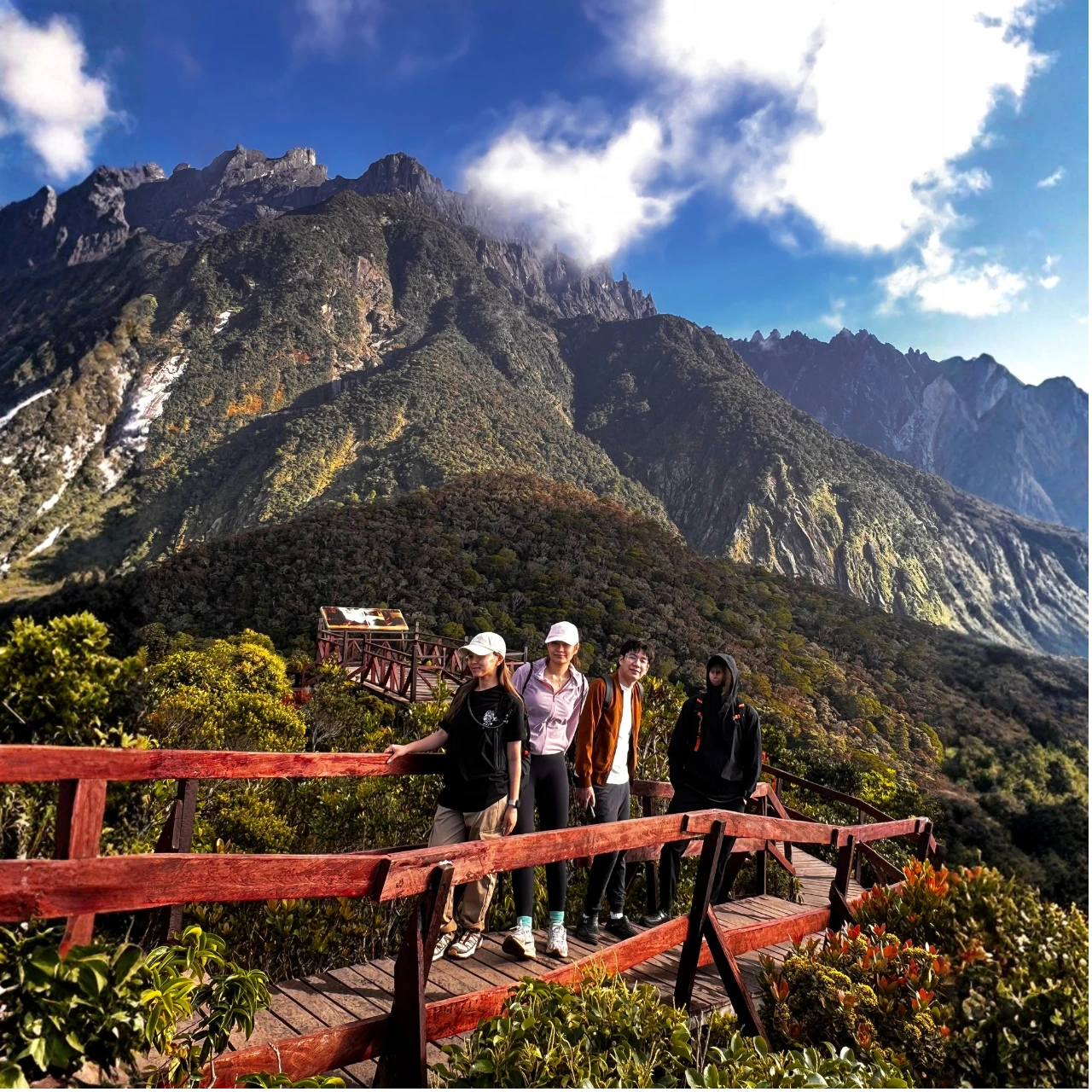
From there, climbers gain roughly 2,200 metres of elevation over the course of the trek to Low’s Peak. That gain happens quickly, and it’s the main reason the climb feels harder than the distance alone suggests.
The trail is a single path with fixed ropes above 3,600 metres, so getting lost isn’t really a concern. Altitude and fatigue are the real variables.
Every climber is required to be accompanied by a licensed Sabah Parks mountain guide. There’s no unguided or fully independent version of this climb, which is worth knowing if you’re picturing a solo wilderness trek.
Minimum Age to Climb Mount Kinabalu
There’s no official minimum age set for climbing Mount Kinabalu. That said, most licensed operators recommend children be at least 10 years old.
The trail has long stretches of steps and steep sections that can be tough for younger kids to manage safely. Any climber under 16 must be accompanied by a mountain guide who is dedicated only to children. Each of these guides can take a maximum of two children, and that guide won’t also be responsible for adult climbers in the same group. So if your group includes three adults and one child under 16, you’ll need to book two separate guides.
On the other end, there’s no upper age cutoff either. Older climbers are welcome as long as they’re in reasonably good health.
If you have any underlying conditions such as hypertension, heart disease, or asthma, a doctor’s clearance before the climb is a smart precaution rather than a formality.
How to Prepare for a Mount Kinabalu Climb
Preparing for Mount Kinabalu isn’t about becoming a mountaineer. It’s about building enough cardio endurance and leg strength to handle a long, steep climb at altitude.
Start with regular cardio a few months out. Hiking, stair climbing, cycling, or running all help build the stamina you’ll need. Stair training is particularly useful since so much of the trail is made up of steps and root systems that function like natural staircases. Add some strength work for your legs and core in the weeks leading up to the climb.
Squats, lunges, and calf raises all help with the descent, which is often harder on the body than the climb up. If you can, do a few practice hikes carrying a loaded daypack. This gets your body used to moving under weight, which is closer to the real experience than walking unloaded.
Sabah Parks also recommends a general health check before attempting the climb, especially if you have any chronic conditions. It’s a two day trek at altitude, and it’s better to know your limits beforehand than to discover them on the mountain.
Climbing Mount Kinabalu for Beginners: What to Expect
For most first time climbers, the trip runs over 2D1N or 3D2N. The 3D2N version adds an extra night near Kinabalu Park before the climb starts, which gives your body a bit more time to adjust to the altitude.
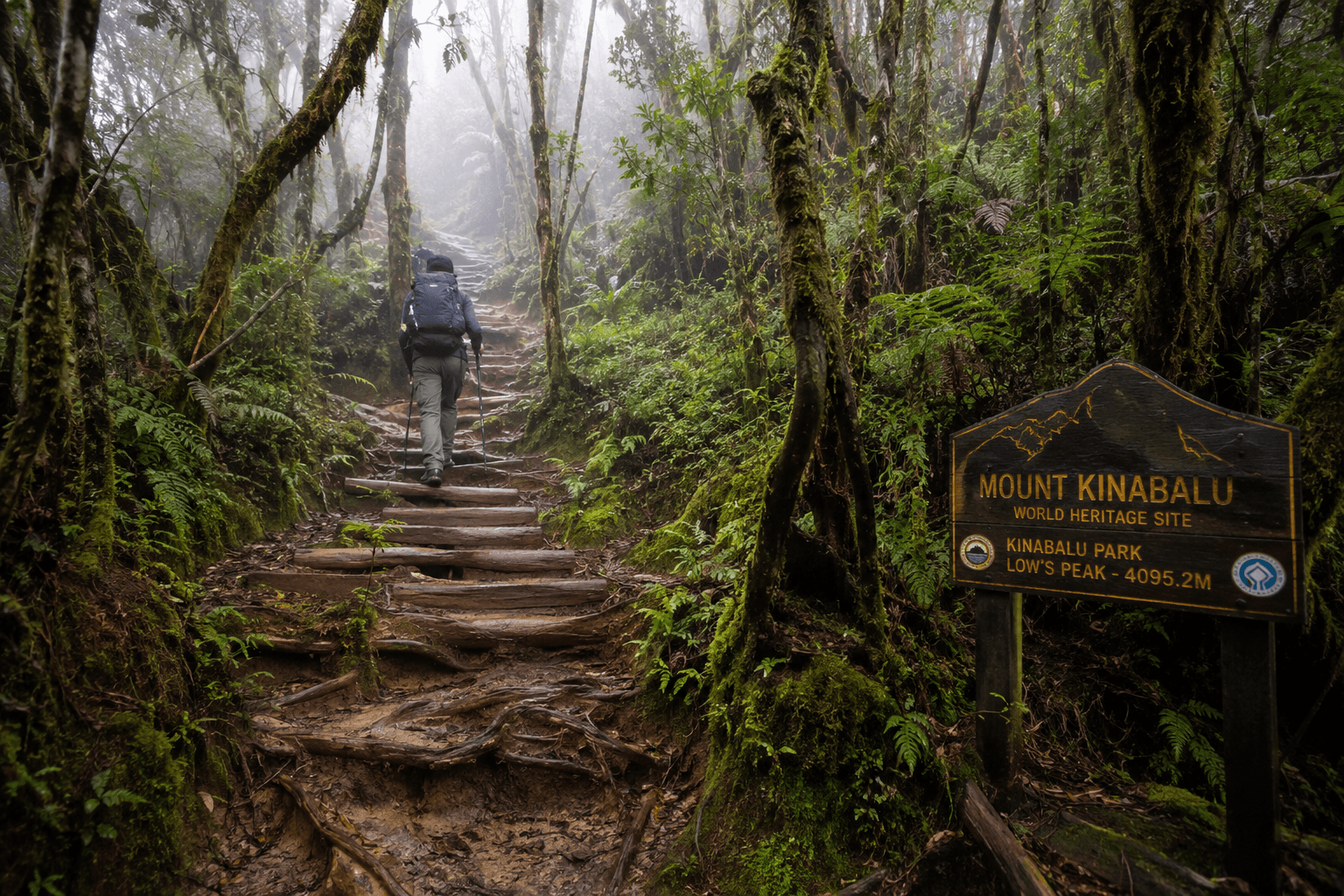
On climb day, you’ll register at Kinabalu Park headquarters, then transfer to Timpohon Gate to begin the ascent.
The walk up to Laban Rata, where most climbers spend the night, typically takes between five and eight hours depending on pace and fitness. You’ll pass through several distinct vegetation zones along the way, from rainforest to mossy forest to open alpine terrain near the top.
After dinner and a short rest at Laban Rata, climbers wake around 2am for the final push to the summit. This part of the climb happens in the dark, using headlamps, with the goal of reaching Low’s Peak in time for sunrise.
The final stretch above 3,600 metres uses fixed ropes across bare granite, which is steep but not technical. After summiting, you’ll descend back to Laban Rata for breakfast, then continue down to Timpohon Gate the same day.
Most climbers are back at the gate by mid to late afternoon.
Tips to Climb Mount Kinabalu Successfully
- Pace yourself from the very start. It’s common for first timers to move too fast in the first hour, then struggle later when the trail gets steeper and the air gets thinner.
- Check all the mount Kinabalu climbing routes and take the easiest path.
- Slow, steady steps get you to the top more reliably than bursts of speed. Drink water consistently rather than waiting until you feel thirsty.
- Dehydration makes altitude symptoms worse, and it’s an easy thing to prevent with regular small sips throughout the day. Layer your clothing instead of relying on one heavy jacket.
- Temperatures shift dramatically between the base of the mountain and the summit, and layering lets you adjust as conditions change. Trekking poles help more than people expect, especially on the descent when knees take the brunt of the impact.
Listen to your guide.
They climb this mountain regularly and know how to read pacing, weather, and fatigue far better than a guidebook ever could. If you start feeling symptoms of altitude sickness such as headache, nausea, or dizziness, tell your guide immediately rather than pushing through quietly.
What to Bring for a Mount Kinabalu Climb
Packing right makes a real difference on a climb like this, where weight matters but so does being prepared for sudden weather changes. For clothing, bring quick dry hiking layers, a warm fleece or insulated jacket for the summit push, and a waterproof shell since rain is common on the lower trail.
Thermal gloves and a beanie are worth packing even if the forecast looks clear, since temperatures near the summit can drop close to freezing before sunrise. For footwear, sturdy hiking boots with good ankle support and grip are essential.
Bring broken in boots rather than new ones, since blisters on this trail can turn a two day trek into a miserable one. For gear, a headlamp with spare batteries is non negotiable for the pre-dawn summit push.
A daypack in the 20 to 30 litre range is usually enough, along with trekking poles if you plan to use them. Bring a refillable water bottle, since water points are available along the trail. For documents, carry your passport or MyKad, since Kinabalu Park requires ID verification during registration.
Keep your climb permit and guide details easily accessible as well. For snacks, pack energy bars, nuts, or dried fruit to keep your energy steady between meals, since the exertion at altitude burns through calories faster than a normal hike. A basic first aid kit with blister plasters and any personal medication rounds out a solid packing list.
Climbing Mount Kinabalu Solo
Climbing Mount Kinabalu solo is entirely possible, but it helps to understand what solo actually means here. Since a licensed mountain guide is mandatory for every climber, you won’t be walking the trail completely alone. What solo climbing really refers to is travelling and booking without a group of friends or family.
Solo climbers are usually paired with a guide and sometimes joined into a shared group for the trek itself, depending on the package and operator. The main thing solo climbers need to plan around is the daily permit quota.
Sabah Parks issues a limited number of permits each day, currently around 163, and popular dates fill up months in advance. If you’re planning a solo climb, especially during peak dry season months or weekends, it’s worth booking as early as possible rather than assuming a spot will be available closer to your travel date.
Solo climbers should also budget a bit more per person compared to group bookings, since guide and accommodation costs are often shared among larger groups.
Best Time to Climb Mount Kinabalu
Mount Kinabalu can technically be climbed year round, but the dry season generally offers more stable weather and clearer summit views. Even during drier months, Sabah Parks closes the summit trail for safety reasons fairly often, with closures happening an average of 15 to 20 times a year due to weather.
Because of this, it’s worth building a little flexibility into your travel plans rather than scheduling the climb on the same day as an international flight home. If bad weather, fatigue, or a delayed descent pushes your timeline back, having a buffer day protects the rest of your trip.
Planning the Rest of Your Sabah Trip Around the Climb
Most climbers fly into Kota Kinabalu a day or two before heading to Kinabalu Park, and the same applies on the way back down. City MPV Travel & Tours handles airport and hotel transfers around Kota Kinabalu, which is useful for climbers who want reliable pickup before heading out to Kundasang or Ranau and a smooth transfer back into the city once the climb is done.
Stop scrolling and start traveling! City MPV Travel and Tours makes it easy to turn this into your next unforgettable trip. Seats fill fast, so grab yours today.
Book Your TourFor travellers who want to build a fuller Sabah itinerary around the climb, pairing it with a day at Mari Mari Cultural Village, an island hopping trip to Manukan and Sapi, or a wildlife river cruise to see proboscis monkeys and fireflies gives the trip some balance beyond just the mountain.
Since your legs will likely need a rest day after the descent, a slower paced island or cultural village tour on either side of the climb tends to fit naturally into the schedule.