

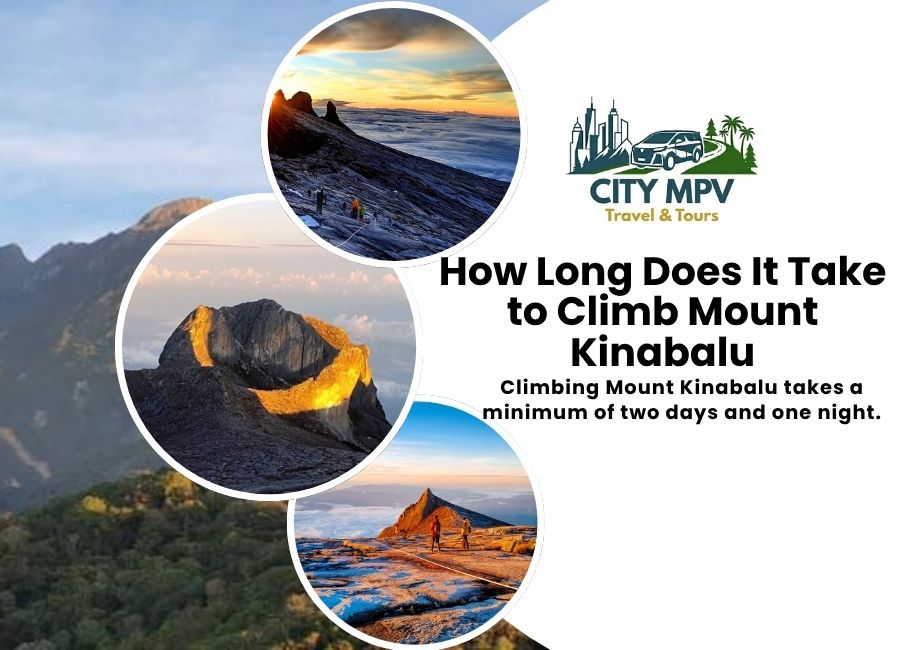
Climbing Mount Kinabalu takes a minimum of two days and one night. This is not a flexible choice. Sabah Parks made the 2D1N structure mandatory after the trail reopened in 2015, and no one day climbs are permitted anymore except under special competition permits.
Within that fixed structure, the actual walking time adds up to roughly 10 to 14 hours spread across two days, depending on your pace, fitness, and the weather on the mountain. Following practical tips to climb Mount Kinabalu can also help you manage your energy and pace more effectively throughout the climb.
Here is exactly how that time breaks down.
Day One: Timpohon Gate to Panalaban
The climb begins at Timpohon Gate, sitting at around 1,866 metres above sea level. From here, climbers cover about 6 kilometres of steep trail through lowland rainforest, mossy forest, and eventually cooler montane terrain.
Most climbers reach Panalaban base camp, where Laban Rata Resthouse is located, in 4 to 6 hours. Fast, fit hikers can do it closer to 4 hours. Climbers taking it slow, stopping often at the shelters along the way, or affected by rain and slippery steps, can take closer to 6 or even 7 hours.
Stop scrolling and start traveling! City MPV Travel and Tours makes it easy to turn this into your next unforgettable trip. Seats fill fast, so grab yours today.
Book Your TourThere are shelters roughly every kilometre, which makes it easy to break the day into manageable stretches rather than treating it as one long push. Guides usually build in time for lunch and short rests, so the total time on the trail includes those stops.
Once at Panalaban, the rest of the afternoon is for resting, eating, and getting ready for the early start ahead. Altitude here sits around 3,270 metres, and this is where the temperature drop really becomes noticeable.
Day Two: The Summit Push
This is the part most climbers ask about specifically, since it happens in darkness and under time pressure.
The wake up call is typically between 1:30am and 2:00am. After a quick meal, climbers begin the final stretch toward Low’s Peak, the summit of Mount Kinabalu at 4,095.2 metres.
This leg covers about 2.7 kilometres, but it is the steepest and most technical section of the entire climb, including a stretch across exposed granite slabs using a fixed rope for support. Most climbers reach the summit in 2 to 4 hours.
The early start is not arbitrary. Reaching the top before sunrise, ideally around 5:30am to 6:00am, is part of choosing the best time to climb Mount Kinabalu because it gives climbers the best chance of clear visibility before clouds build up over the peak, which they almost always do by mid morning.
| Climb section | Approximate time | Distance | Typical timing |
|---|
| Timpohon Gate to Panalaban | 4 to 6 hours | About 6 km | Day 1 |
| Rest at Panalaban | Several hours | — | Day 1 |
| Panalaban to Low’s Peak | 2 to 4 hours | About 2.7 km | Day 2 |
| Summit to Panalaban | About 2 hours | About 2.7 km | Day 2 |
| Panalaban to Timpohon Gate | 4 to 6 hours | About 6 km | Day 2 |
| Total walking time | About 10 to 14 hours | About 17.4 km round trip | 2 days |
The Descent
After summiting, climbers head back down to Panalaban, which usually takes about 2 hours. After a short break, breakfast, and checking out, the descent continues all the way down to Timpohon Gate.
This final stretch takes another 4 to 6 hours, since descending thousands of steps puts real strain on the knees and often ends up feeling harder than the way up.
Added together, most climbers are back at Timpohon Gate by mid to late afternoon on day two, having covered close to 17.4 kilometres round trip since starting the climb.
Does a 3D2N Package Take Longer to Climb
Not in terms of actual climbing hours. A 3D2N Mount Kinabalu package adds an extra night before the climb, usually at Kinabalu Park headquarters or a highland resort in Kundasang.
This extra day is for acclimatisation and rest, not additional trekking. The climbing itself still follows the same 2D1N structure once it begins. Climbers who choose the longer package simply arrive better rested and slightly more adjusted to the altitude before starting.
What Affects How Long the Climb Takes
A few factors can shift these times noticeably.
Fitness level plays the biggest role. Climbers with a solid cardio base tend to move faster and need fewer breaks.
Weather conditions matter just as much. Rain makes the granite sections slower and more cautious going, both up and down.
Group size can slow things down too, since mountain guides pace the climb to the slowest member of the group they are assigned to.
Choosing the Via Ferrata route adds extra time after the summit, since it involves an additional activity along fixed cables and rungs before descending, typically adding 2 to 3 hours to the day.
For context, elite athletes competing in the Mount Kinabalu International Climbathon have completed the full round trip in under 3 hours. That is not a realistic benchmark for regular climbers, but it shows how much timing varies with fitness and experience.
Stop scrolling and start traveling! City MPV Travel and Tours makes it easy to turn this into your next unforgettable trip. Seats fill fast, so grab yours today.
Book Your TourPlanning Around the Time Commitment
Given the fixed 2D1N structure, most travellers coordinate transport, permits, accommodation, and a licensed guide as one package rather than booking each piece separately.
City MPV Travel and Tours arranges Mount Kinabalu climbing packages from Kota Kinabalu, handling the permit process, transfers, and overnight logistics so the timing above is managed for you rather than something you have to piece together yourself. You can check current climb packages and departure schedules on their Mount Kinabalu climbing page.