
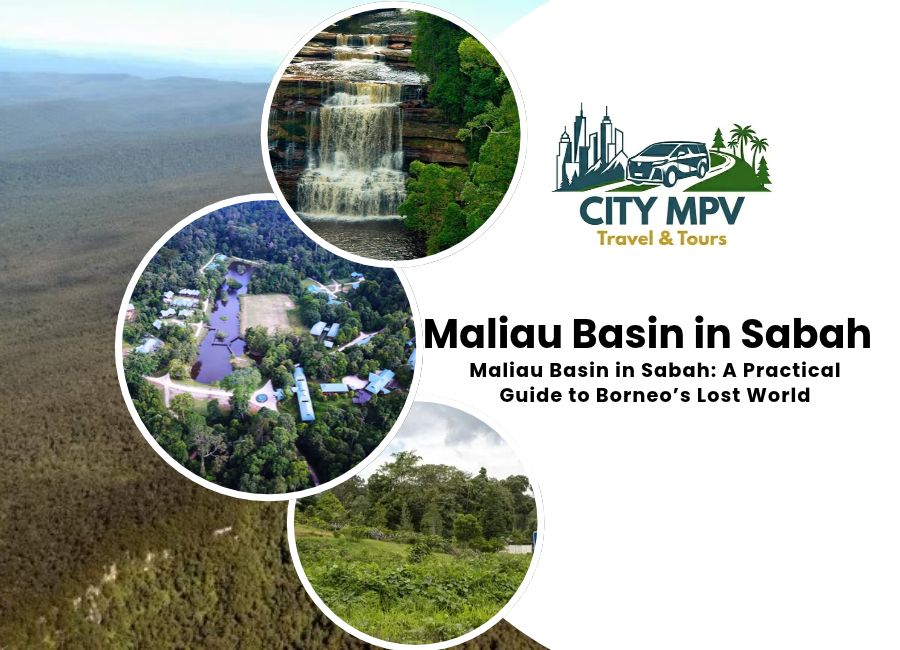
Maliau Basin in Sabah is one of the few places in Borneo where the rainforest still feels untouched. It sits in the south central part of the state, inside a huge bowl of land ringed by steep escarpments. It is often called Sabah’s Lost World, and the name fits. There are no roads inside it, no villages, and no shortcuts. If you want to see its waterfalls, you walk.
I will explain what the Maliau Basin Conservation Area is, how to reach it, how permits work, which trek suits you, and when to go.
What Is Maliau Basin?
The Maliau Basin Conservation Area covers roughly 588 square kilometres of lowland and hill rainforest. Yayasan Sabah, the Sabah Foundation, set it aside as a conservation area in 1981, and it is protected as a Class I Forest Reserve. The land has never been permanently settled, which is one reason researchers still record rare species there.
The basin works like a natural catchment. Rain runs down the inner slopes into the Maliau River, which is the only way water leaves the bowl. From there it flows toward the Kuamut and eventually the Kinabatangan River. That is why the area has so many waterfalls, and why protecting it matters for rivers far downstream.
Waterfalls, Plants and Wildlife
The main attraction is Maliau Falls, a seven-tier cascade deep inside the basin. Most trekkers walk for days to reach it, and it is the highlight of the longer routes.
Closer to Nepenthes Camp you can visit three more falls on day walks. Giluk Falls is the easiest to reach, and its pool has a tea-coloured tint from tannins in the forest. Takob Akob Falls has a steeper approach and a long drop. Fauzi Falls is quieter and good for a long rest. Near Ginseng Camp there is also Ginseng Falls, where many groups swim after a day of walking.
The plant life is just as interesting. Maliau Basin is home to nine species of Nepenthes pitcher plants, along with an estimated 1,800 tree species. More than 270 bird species have been recorded, and mammals include the Bornean pygmy elephant, sun bear and several primates.
Stop scrolling and start traveling! City MPV Travel and Tours makes it easy to turn this into your next unforgettable trip. Seats fill fast, so grab yours today.
Book Your TourSet your expectations on wildlife. Animals here are not used to people and the forest is dense, so sightings are never guaranteed. Treat Maliau as a trekking and rainforest destination first. If close animal encounters are your main goal, Danum Valley or a Kinabatangan River cruise suit you better.
Key Places Inside the Conservation Area
| Place | What you will find | Why it matters |
|---|---|---|
| Maliau Basin Studies Centre | Hostel and chalets, nature gallery, observation tower, night drives | Base for every trip and the usual starting point |
| Maliau Sky Bridge | Canopy walkway linking eight trees beside the Maliau River | Easy walk with good birdwatching |
| Nepenthes Camp | Camp with trails to Giluk, Takob Akob and Fauzi Falls | Pitcher plants and the first waterfall day |
| Ginseng Camp | Camp near Ginseng Falls | Closest overnight stop for Maliau Falls |
| Maliau Falls | Seven-tier waterfall in the heart of the basin | Main reward of the full trek |
How to Get to Maliau Basin
The nearest town is Tawau. Most visitors fly from Kota Kinabalu to Tawau, then travel overland to the Maliau Basin Studies Centre, which takes around four hours. Some operators quote a little longer depending on stops and road conditions. Keningau is another access point on the western side.
The road is mostly sealed, but the last part is rough. A four wheel drive is the safest choice, especially in wet weather. Most travellers book a transfer with their tour or arrange one through the conservation area office.
Permits and Entry Rules
Entry is controlled. You need permission from Yayasan Sabah before you go, and visitors must be accompanied by a guide or ranger. Groups usually get one guide for every six people.
You must also carry personal accident insurance that includes emergency helicopter evacuation. Rangers ask to see proof before letting you in. The area is remote, communication is limited to radio, and help takes time to arrive, so this rule is not a formality.
Booking through a licensed operator or directly with the Maliau Basin Conservation Area office is the simplest way to cover permits, guides and fees in one go.
Choosing a Maliau Basin Trek
The right trip depends on your fitness and how many days you have. Trekking days are long, the terrain is steep in places, and leeches and mud are normal.
| Option | Typical length | What it covers | Best for |
|---|---|---|---|
| Studies Centre package | 3 days 2 nights or 4 days 3 nights | Sky Bridge, observation tower, night walks, short guided trails | First timers, families, anyone avoiding multi-day treks |
| Shorter trek | 4 days 3 nights | Studies Centre plus camps and nearby waterfalls | Moderately fit walkers with limited time |
| Full loop trek | 5 days 4 nights | Camps, several waterfalls, Maliau Falls and montane heath forest | Fit trekkers who want the full experience |
Reaching Maliau Falls needs at least three days of trekking, and five days is the better choice if you also want the smaller falls and the higher forest. The full loop is roughly 42 to 45 kilometres on foot. Exact routes and inclusions vary by operator, so confirm the itinerary before you pay.
Best Time to Visit Maliau Basin
The dry season, roughly March to September, is the most comfortable time. Trails are firmer, rivers are easier to cross and the walking days feel shorter. The wetter months make the waterfalls fuller and the forest greener, but paths turn slippery and leeches are everywhere. Conditions change from year to year, so ask the conservation area office about trail status before you lock in dates.
What to Pack
Good trekking shoes matter most, followed by a light rain jacket, insect repellent, leech socks and a small personal first aid kit. Pack everything in dry bags, bring a trekking pole if you use one, and keep luggage light because camps are basic. Most groups leave their main bags at the Studies Centre and carry only a day pack.
Combining Maliau Basin With the Rest of Sabah
Maliau pairs well with other nature stops in the east and centre of the state, such as Tawau, Danum Valley and the Kinabatangan River. Many travellers spend a few days in Kota Kinabalu before or after the jungle section to rest and sort out logistics.
If you are building Maliau Basin into a longer Sabah trip, City MPV Travel and Tours can help with the Kota Kinabalu side, including airport transfers, city and island tours, and car rental for the days you are not on the trail.
Quick Answers
Is Maliau Basin open to the public?
Yes, but access is controlled. You need advance permission, a guide or ranger, and insurance that covers helicopter evacuation.
How many days do you need?
Three days is the minimum to reach Maliau Falls, and five days gives a fuller experience. Shorter Studies Centre stays work if you only want the Sky Bridge and nearby trails.
Can beginners visit?
Yes, through the Studies Centre packages. The multi-day treks need good fitness and comfort with basic camps.
Stop scrolling and start traveling! City MPV Travel and Tours makes it easy to turn this into your next unforgettable trip. Seats fill fast, so grab yours today.
Book Your Tour