

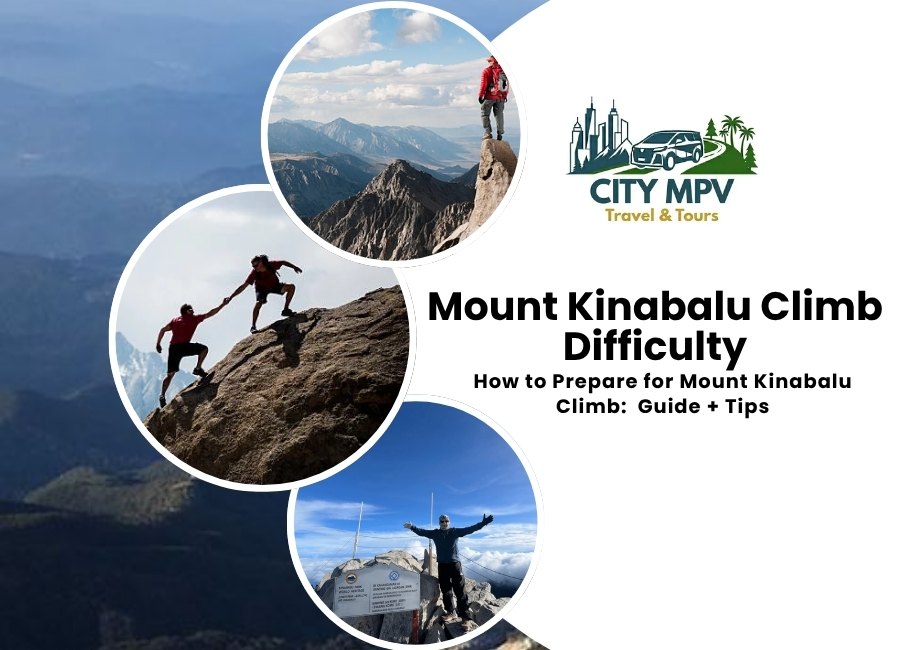
Mount Kinabalu is often described as one of the most “climbable” high mountains in the world. No ropes, no technical mountaineering skills, no ice axe required.
But don’t let that fool you into thinking it’s easy. At 4,095 metres, Low’s Peak is the highest point in Malaysia and one of the highest peaks in Southeast Asia.
The climb itself is a steep, sustained trek covering 8.7km one way from Timpohon Gate, done over two or three days.
Most people who’ve done it will tell you the same thing. It’s not technically hard, but it’s physically one of the toughest short hikes they’ve ever attempted.
How Difficult Is Mount Kinabalu, Really
The difficulty comes from three things stacking on top of each other.
First is the terrain. Day one is a long, relentless staircase through montane rainforest, thousands of steps that never seem to end. Day two starts around 2am with a summit push over open granite slabs, using fixed ropes for grip rather than technical climbing.
Second is the altitude. Laban Rata, where most climbers overnight, sits above 3,270 metres. The summit is over 4,000 metres. At that height, thinner air makes breathing harder and headaches, nausea, or fatigue are common even in fit climbers.
Third is the cold and darkness. Temperatures near the summit can drop close to freezing before sunrise, and climbers are moving in the dark with headlamps for most of the final push.
Stop scrolling and start traveling! City MPV Travel and Tours makes it easy to turn this into your next unforgettable trip. Seats fill fast, so grab yours today.
Book Your TourNone of this requires climbing experience. It requires stamina, mental grit, and realistic preparation.
Climbing Mount Kinabalu for Beginners
Here’s the reassuring part.
You genuinely don’t need prior hiking or mountaineering experience to climb Mount Kinabalu. Thousands of first time hikers do it every year, including people in their sixties and seventies who trained properly beforehand.
What beginners should understand going in is the pacing.
This isn’t a climb you rush. Guides set a slow, steady rhythm on purpose, because going too fast at altitude is exactly what causes altitude sickness and early exhaustion.
If you’re new to multi day hikes, choosing the 3D2N itinerary over the 2D1N option gives your body an extra night to acclimatise at Kinabalu Park before the real ascent begins.
It’s a small change that makes a noticeable difference for beginners.
How to Prepare for Mount Kinabalu Climb
Preparation is where most people either set themselves up for a great climb or a miserable one. To Prepare for Mount Kinabalu Climb, start with cardio. Stair climbing, hiking, cycling, or running a few times a week for at least four to six weeks before your trip builds the endurance you’ll need for thousands of steps.
Add leg strength work. Squats, lunges, and step ups train the exact muscles that get hammered on the descent, which is often harder on the body than going up.
Break in your hiking shoes well before the climb. New boots on summit day is one of the most common mistakes climbers make, and blisters at 3,000 metres are miserable.
Practice with a loaded daypack. Even though porters can carry your main bag, you’ll still be walking with water, snacks, and layers on your back for hours.
If you can, do at least one or two practice hikes on hilly terrain before you fly to Sabah. It won’t fully replicate Kinabalu, but it tells your body what sustained climbing feels like.
Minimum Age to Climb Mount Kinabalu
There’s no strict minimum age enforced by Sabah Parks for the standard Timpohon route, but most licensed operators recommend children be at least 10 years old, mainly because of the number of steps and the exposed sections near the summit.
Guide ratios also come into play here.
One mountain guide can take up to five climbers aged 16 and above, or a maximum of two children under 16 in the same group.
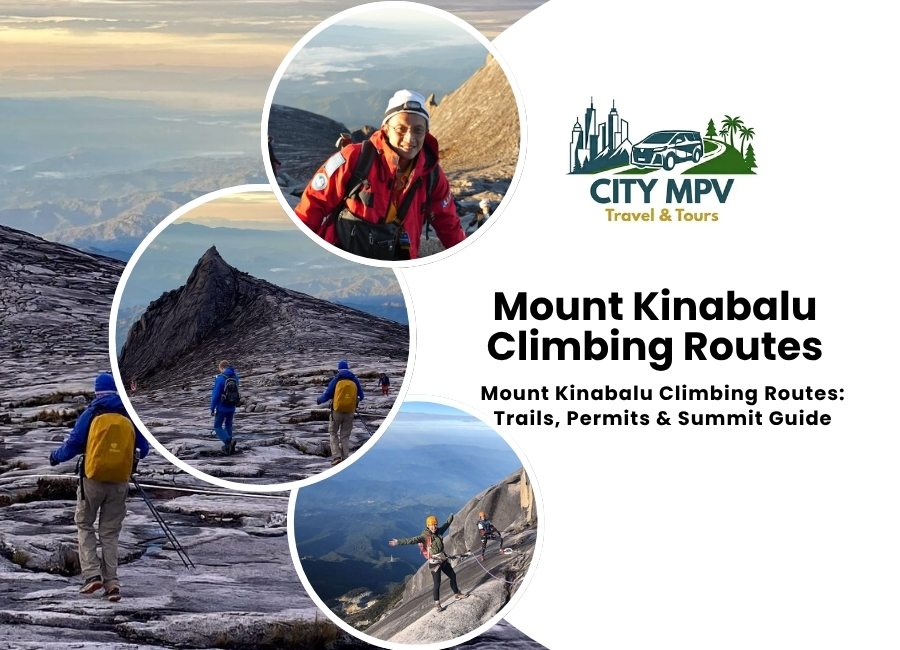
If you’re planning the Via Ferrata add on, note that the minimum age requirements are stricter and vary by route. The Mount Kinabalu climbing routes include options such as Walk the Torq, which is generally open to climbers around 10 years and older, while the more advanced Low’s Peak Circuit typically requires climbers to be at least 17.
On the upper end, there’s no fixed maximum age either, but older climbers are encouraged to get a doctor’s clearance beforehand, especially if they have any heart or respiratory conditions, given the altitude involved.
What to Bring for Mount Kinabalu Climb
Packing right makes a real difference in how much you enjoy the climb. For clothing, layers matter more than any single heavy jacket.
A moisture wicking base layer, a light fleece or insulated mid layer, and a waterproof windbreaker will cover you from humid lowland forest to near freezing summit winds.
For footwear, sturdy hiking shoes with good grip are essential, along with a spare pair of socks for after the summit push.
Other essentials include a headlamp with extra batteries for the 2am start, a reusable water bottle, high energy snacks like nuts or energy bars, a light pair of gloves, a buff or beanie for the cold summit, sunscreen and sunglasses for daytime exposure, and basic personal medication including something for altitude headaches.
A walking pole or two genuinely helps on both the ascent and, more importantly, the knee jarring descent.
Cash in small denominations is worth carrying too, since porter tips and small purchases at Laban Rata are usually cash only.
Climbing Mount Kinabalu Solo
This is a common question, and the answer is straightforward.
You cannot climb Mount Kinabalu completely alone. Sabah Parks regulations require every climber to be accompanied by a registered mountain guide, and a permit cannot be issued without one.
What “solo” really means for most independent travellers is climbing without a group of friends or family, not climbing without a guide. In that sense, solo climbing is very common and well supported.
Many operators can pair solo travellers into a shared group with a shared guide, which also works out cheaper than booking a private guide alone.
If you’re travelling from elsewhere and arriving in Kota Kinabalu without a group already arranged, booking a few months ahead matters, since only around 163 permits are released per day and popular dates fill up quickly.
Tips to Climb Mount Kinabalu Successfully
Pace yourself on day one.
- Slow and steady beats fast and burnt out, especially with day two still ahead of you.
- Eat and hydrate even when you don’t feel like it.
- Appetite often drops at altitude, but your body still needs the fuel.
- Sleep as much as you can at Laban Rata, even if it’s only a few hours before the 2am wake up call.
- Dress in layers you can remove as the sun rises and the temperature climbs quickly once you’re moving.
- Listen to your guide.
- They read weather, pacing, and fatigue signs long before most climbers notice them in themselves.
- You cannot climb Mount Kinabalu completely alone.
And avoid climbing during the November to January monsoon period if you can help it, since summit closures due to weather are more frequent during those months.
Stop scrolling and start traveling! City MPV Travel and Tours makes it easy to turn this into your next unforgettable trip. Seats fill fast, so grab yours today.
Book Your TourLet’s go to Kinabalu Park
The mountain itself sits around two and a half hours from Kota Kinabalu city, and getting there comfortably matters more than people expect after a long flight or a short holiday schedule.
For travellers based in Kota Kinabalu who need reliable private transfers to Kinabalu Park before or after the climb, City MPV Travel and Tours arranges MPV transport that takes the stress out of early morning departures and tired post climb journeys back to the city.
It’s a small logistical detail, but after two days on the mountain, a comfortable ride back to your hotel is exactly the kind of thing you’ll appreciate.