

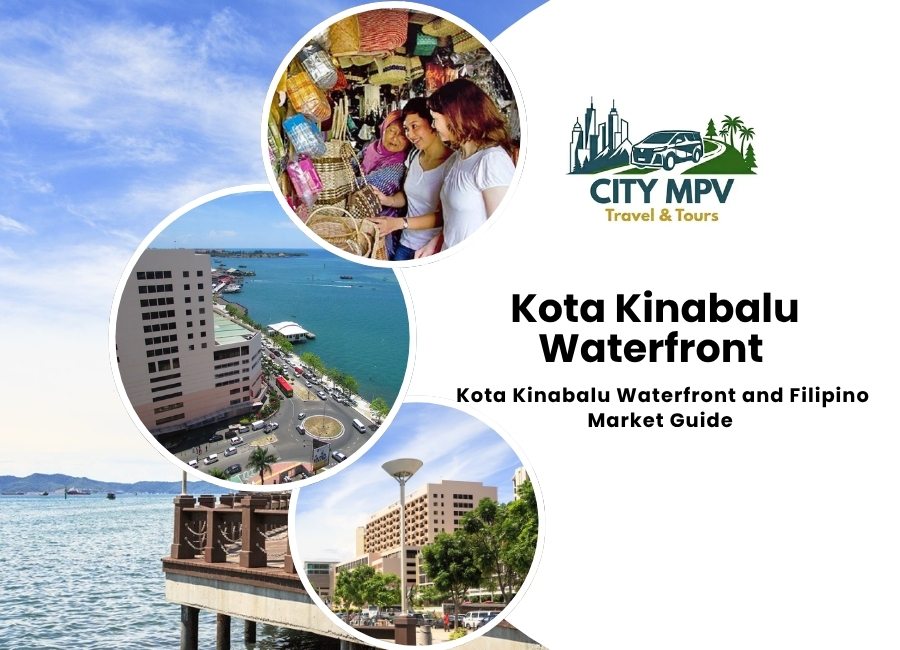
Only a few places capture the everyday rhythm of Kota Kinabalu quite like its waterfront. Stretching along Jalan Tun Fuad Stephens in the heart of the city, the Kota Kinabalu Waterfront is where locals and travelers gather every evening to watch the sun sink into the South China Sea.
Right beside it sits the Kota Kinabalu Filipino Market, a lively cluster of stalls that has been part of the city’s identity since the 1970s. Together, these two spots form one of the most rewarding half days you can spend in Kota Kinabalu.
I’ll walk you through what to expect at both 😀 , when to visit, and how to make the most of your time there.
What Is the Kota Kinabalu Waterfront
The Kota Kinabalu Waterfront (KK Waterfront) is a long esplanade that runs along the city’s coastline.
It was developed as part of a major seafront project completed around 2010, designed to give Kota Kinabalu a proper gathering space by the sea, similar to waterfront developments in cities like Cape Town and Singapore.
Today it functions as the city’s main dining and social strip. Kota Kinabalu’s major Restaurants, bars, and open-air eateries line the boardwalk, many of them built to catch the evening breeze and the view out toward Tunku Abdul Rahman Marine Park.
By day, the waterfront is quieter, with joggers and photographers making the most of the open space. By late afternoon, it fills up fast, as both residents and visitors claim tables ahead of sunset.
Best Time to Visit the Waterfront
Sunset is the main draw here. Between 5:45 PM and 6:30 PM, depending on the season, the sky over the sea turns shades of orange and gold that pull in a steady crowd of photographers and diners.
If you want a table with a direct sea view, arrive at least thirty minutes before sunset. Popular spots fill quickly, especially on weekends.

For a calmer visit, an early morning walk along the boardwalk is worth doing too. The air is cooler, the crowds are gone, and you get a clearer view of the islands sitting just offshore.
Dining and Nightlife at the Waterfront
Food is where the Kota Kinabalu Waterfront really shines. Expect a wide mix of local Malaysian dishes, fresh seafood, and international options sitting side by side along the same stretch.
Seafood restaurants here let you pick your own catch by weight, a common style across Kota Kinabalu that guarantees freshness. Beyond seafood, you will find Italian kitchens, Indian restaurants, Korean spots, and casual bars with live music once the sun goes down.
The nightlife scene picks up noticeably after dinner hours. Several venues along the strip stay open past midnight, with DJs, live bands, and a relaxed crowd that spans both tourists and local regulars.
What Is the Kota Kinabalu Filipino Market
Right next to the waterfront sits the Kota Kinabalu Filipino Market, known locally by several names including Pasar Filipino, Pasar Besar, and the Handicraft Market.
The market takes its name from the Filipino traders and settlers who established stalls here starting in the 1970s, bringing with them crafts, textiles, and trading traditions from across the Sulu Sea.
It has since grown into one of the most recognizable shopping destinations in Sabah, spread across a maze of narrow, covered lanes packed with small stalls.
What You Can Buy at the Filipino Market
The market is best known for handicrafts and souvenirs, and this is where most visitors spend the bulk of their time.
Sabah pearls are a signature item here, sold loose or already set into earrings, rings, and pendants. Vendors are usually happy to help you pick a piece and can often customize settings on the spot.
Beyond pearls, stalls sell batik fabrics, woven bags, wooden carvings, keychains, and printed t-shirts with local designs. Bargaining is expected and part of the experience, so it helps to have a price in mind before you start.
Toward the edges of the market, local tailors work at manual sewing machines, offering quick alterations for anyone who needs a hem or a fit adjusted while they wait.
Food at the Filipino Market
The food section of the market runs on a different schedule than the handicraft stalls. Seafood vendors set up in the late afternoon and stay busy well into the night, grilling fish, prawns, and squid right at the stall.
This is also where you will find dried snacks, local fruit, and small eateries selling Malay and Filipino-style dishes at prices well below what you would pay along the main waterfront strip.
Evenings between 5 PM and 10 PM are the liveliest, when the market shifts into its night market rhythm and the smell of grilled seafood fills the lane.
How to Get There
Both the waterfront and the Filipino Market sit along Jalan Tun Fuad Stephens, within easy walking distance of most hotels in downtown Kota Kinabalu.
If you are staying further out, a Grab ride typically costs between RM 5 and RM 15 depending on distance, and the drive from Kota Kinabalu International Airport takes around 10 to 15 minutes.
Public buses running along Jalan Tun Fuad Stephens also stop near the market, though taxis remain the more convenient option for most visitors.
Nearby Attractions Worth Combining
Since the waterfront and Filipino Market sit so close together, it makes sense to pair them with a few other nearby stops.
Jesselton Point, the departure point for island hopping trips to Manukan, Sapi, and Gaya Island, is a short walk away. Signal Hill Observatory Tower offers panoramic views over the city and is an easy add-on for sunset seekers who want an elevated vantage point instead. The Atkinson Clock Tower, one of Kota Kinabalu’s oldest landmarks, is also within reach for those exploring the old town on foot.
Some Practical Tips for Your Visit
Bring cash, since most stalls at the Filipino Market and several smaller eateries along the waterfront only accept Ringgit Malaysia.
Dress light and casual given the humidity, and consider insect repellent since the seafront areas can attract mosquitoes in the evening.
If you plan to eat at the night market stalls, confirm prices before ordering, particularly for seafood sold by weight, to avoid any confusion at the bill.
Getting between the waterfront, the Filipino Market, and the rest of Kota Kinabalu’s attractions is much easier with a driver who already knows the city’s traffic patterns and parking spots. City MPV Travel and Tours offers private transfers and city tours across Kota Kinabalu, making it simple to combine a sunset waterfront dinner with stops at other landmarks in a single, well-planned day. You can check available options on our Kota Kinabalu City Tour page.