

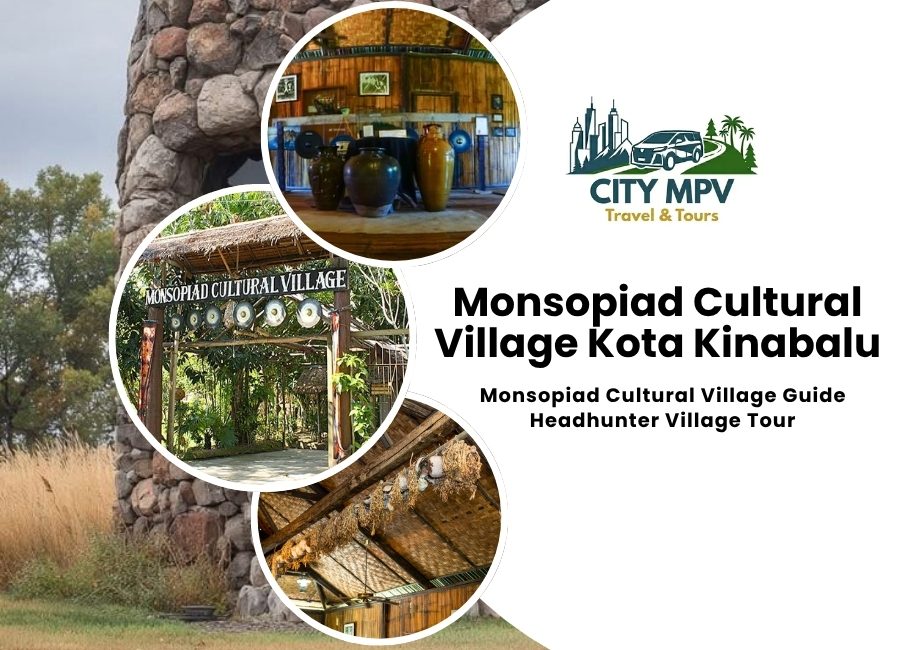
Tucked inside the Penampang District, about 16 kilometres from the city centre of Kota Kinabalu, Monsopiad Cultural Village stands on ground that has carried the weight of legend for over two centuries.
Monsopiad Cultural Village, also known as Monsopiad Heritage Village, is one of the most important cultural and historic attraction ractions near Kota Kinabalu. Located in Penampang, about 30 minutes from KK city, it tells the story of Monsopiad, a legendary Kadazan-Dusun warrior and headhunter.
Visitors come here to see the House of Skulls, traditional Kadazan-Dusun houses, cultural performances, local food, rice wine, and village activities. For travellers looking for Kota Kinabalu cultural tour, this is one of the best places to understand Sabah’s indigenous heritage in a short half-day trip.
For visitors to Sabah, it is one of the most distinctive stops in the entire state.
Who Was Monsopiad?
The story of Monsopiad begins long before the village ever opened its gates to the public.
Born into the village of Kuai in what is now the Penampang District, Monsopiad grew up during a time when his community was under constant threat from raiding groups and bandits. He trained as a warrior from a young age, driven by the ambition to protect his people from the attacks that had long disrupted village life.
When he came of age, he made a vow to rid his village of these threats. He kept that vow. Each time he defeated an enemy, he returned with their head as proof, and the skull was hung from the rafters of his home as a trophy and a declaration of protection.
He succeeded in defeating 42 enemies before the arc of his story took a darker turn. The violence that had once made him a hero became an obsession he could no longer control. He began provoking even peaceful men into fights. The very village he had defended eventually united against him, and Monsopiad was killed by his own community.
Despite his end, he was mourned. He was a man who had protected them with everything he had. His legacy survived him, and it is that legacy which visitors come to experience today.
A Living Museum Built by His Descendants
Monsopiad Cultural Village was formally opened to the public in 1996. It was established not by the government or a tourism board, but entirely through private means by Monsopiad’s sixth and seventh generation descendants.
The village sits on the very land where Monsopiad once roamed, along the scenic banks of the Moyog River. It is classified as an open-air, living history museum, meaning the culture here is not exhibited behind glass. It is performed, demonstrated, and explained by the people who carry it in their own bloodlines.
That distinction matters. The authenticity of the experience is inseparable from the fact that this place is still family-owned, family-operated, and driven by a genuine desire to keep Kadazan-Dusun heritage alive.
What to See Inside the Village
The House of Skulls (Siou Do Mohoing)
This is the centrepiece of the village, and nothing quite prepares a visitor for it.
The House of Skulls has been standing since 1979, predating the cultural village itself. Inside, all 42 skulls attributed to Monsopiad’s headhunting campaigns hang from the rafters, just as they did in his time.
Visitors are asked to seek permission before entering. This is not a performative ritual. The Kadazan-Dusun community regards this space as sacred, and the skulls are understood not as morbid curiosities but as spiritual objects tied to the protection of the community. The house is treated with the same reverence that a place of worship might receive elsewhere.
The history behind each skull, and the oral tradition surrounding headhunting as a system of justice and spiritual balance, is explained during the guided tour.
Kotos Di Monsopiad: The Main House
This is the dedicated space for the life story of Monsopiad himself.
Inside the main house, artefacts from a vanished way of life are displayed alongside a telling of Monsopiad’s journey. Ceramic jars, padi grinders, bamboo tools, and traditional Kadazan-Dusun implements surround visitors as a guide walks them through the warrior’s legend.
One of the most significant items on display is the ceremonial costume of Bobohizan Inai Bianti, a direct descendant of Monsopiad and a senior high priestess in the Kadazan-Dusun spiritual tradition. The Bobohizan is a figure of deep cultural weight. These women serve as mediators between the human world and the spiritual realm, performing healing rituals and ceremonies that have defined Kadazan-Dusun life for generations.
The Tangkob: The Paddy Granary
At the heart of the village sits the Tangkob, a traditional granary where padi rice is housed.
Rice is not simply a staple crop in Kadazan-Dusun culture. It holds spiritual significance, and the granary is understood as a space where the essence of the community’s sustenance is kept and honoured. Visitors learn how rice is central to ceremonies, to the production of traditional rice wine, and to the fabric of daily life.
The Gintutun Do Mohoing: The Sacred Monolith
This large stone monolith is one of the more quietly haunting features of the village.
The Gintutun Do Mohoing is believed to be inhabited by spirits from the past and is associated with a cluster of Kadazan-Dusun legends. The menhir thought to mark Monsopiad’s resting place stands nearby, a physical anchor to the timeline of his life.
The stories connected to these stones are shared during the guided experience and give context to the spiritual worldview that underpins much of what visitors see across the village.
Planning Your Monsopiad Tour:
Location: Kuai Kandazon Village, Jalan Putatan Ramayah, Penampang District, Sabah. Approximately 16 km from Kota Kinabalu city centre, reachable in about 30 minutes by car.
Opening Hours: Open daily from 9:00 am to 4:00 pm. Closed on Tuesdays.
Cultural Performances: Typically scheduled at 11:00 am and 2:00 pm. Timing may vary, so checking ahead is worthwhile.
Ticket prices include a guided tour, access to all exhibits, and entry to the cultural performance. Advance booking is recommended, as walk-ins are not always accepted.
Getting There: Public bus No. 13 runs from the station near Wawasan Plaza in KK city toward Donggongon Town in Penampang. Visitors can also use Grab or arrange private transport.
Cultural Performances and Hands-On Activities
Beyond the exhibits, the village runs live cultural performances multiple times a day.
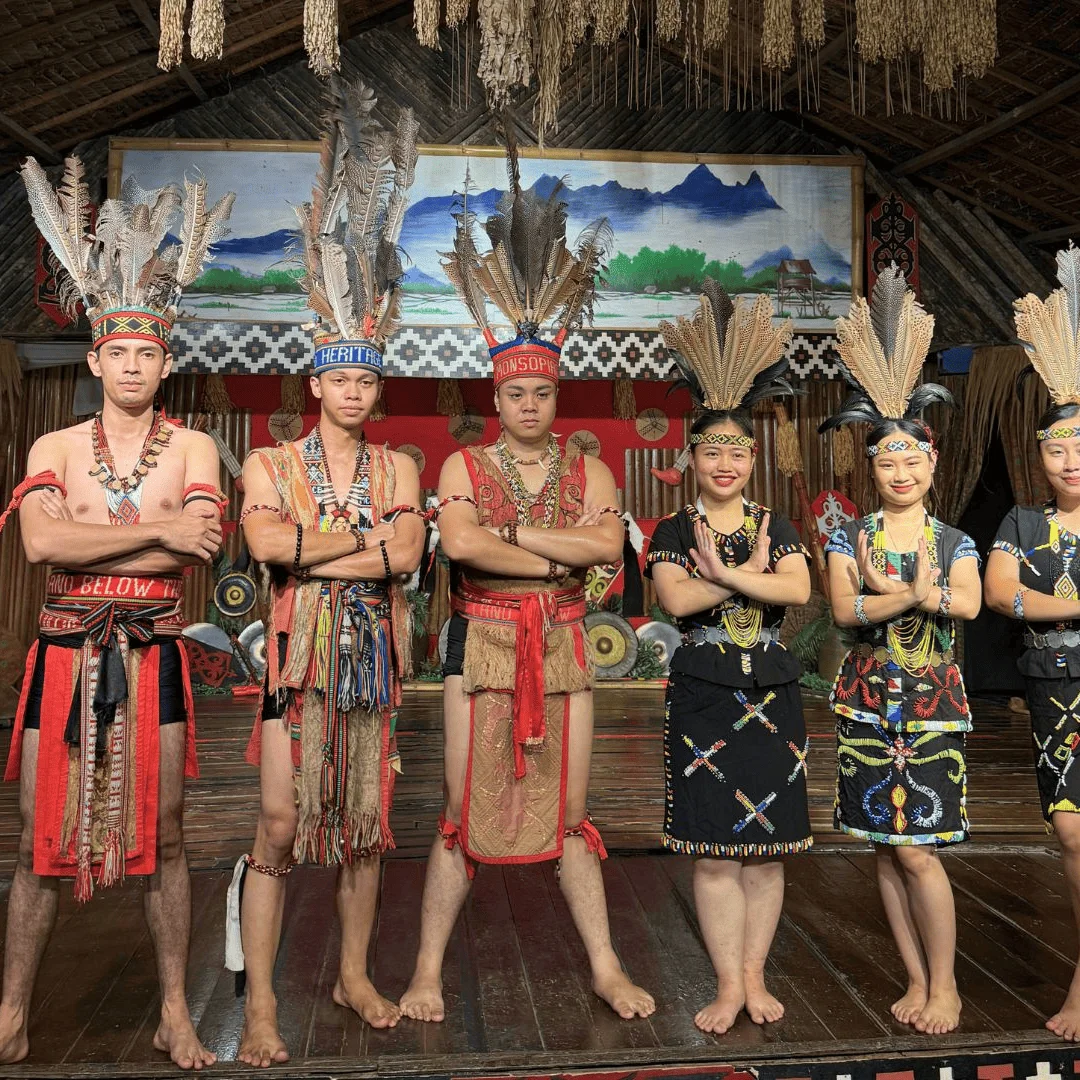
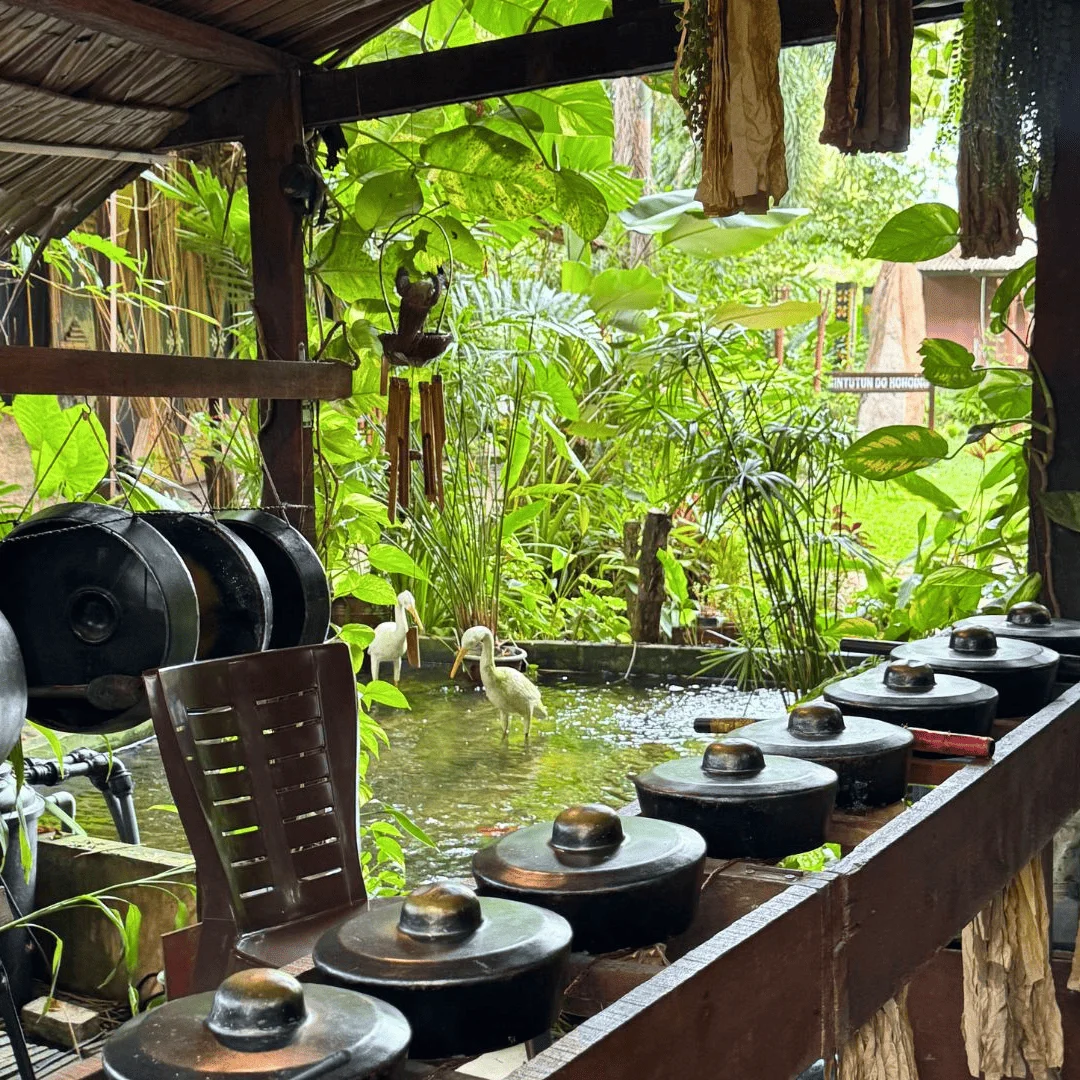
Traditional dances are performed, gongs are sounded, and guests are given the chance to try blowpipe shooting, a skill the Kadazan-Dusun and other Borneo peoples have practised for centuries. Lihing, a traditional rice wine brewed within the village, is offered as a welcome drink and as a way to introduce guests to the culinary customs of the community.
Traditional food prepared with local ingredients is served at the village restaurant, giving visitors a complete sensory encounter with the culture rather than a purely observational one.
Why Monsopiad Cultural Village Stands Apart
Sabah has no shortage of natural attractions. Mount Kinabalu, the islands of Tunku Abdul Rahman Park, the wildlife cruises along the rivers of the interior: these are the experiences most visitors plan for first.
But Sabah’s indigenous cultures are equally part of what makes the state worth visiting. The Kadazan-Dusun people are the largest ethnic community in Sabah, and their traditions, spiritual practices, agricultural customs, and oral histories are not widely known beyond this part of Borneo.
Monsopiad Cultural Village is the only cultural village in Sabah dedicated entirely to this heritage. It is privately run, rooted in an actual family history, and built on the exact ground where the story it tells originally unfolded.
That combination of authenticity, specificity, and immersive experience is difficult to replicate.
Combining the Village With a Broader Kota Kinabalu Itinerary
Most Tours to Monsopiad Cultural Village take a half-day, making it easy to combine with other Kota Kinabalu activities before or after.
The village pairs naturally with a stop at the Sabah State Museum for a wider look at Borneo’s natural and cultural history. A visit to the Kota Kinabalu City Mosque on the way back into the city adds another layer to the day. For travellers who want to balance culture with wildlife, a Proboscis Monkey and Fireflies River Cruise in the evening rounds out a full and varied day in Sabah.
Frequently Asked Questions
Where is Monsopiad Cultural Village located?
Monsopiad Cultural Village is located in Penampang, Sabah, about 16 km from Kota Kinabalu city centre. The drive usually takes around 30 minutes.
What is Monsopiad Cultural Village famous for?
It is famous for the story of Monsopiad, a Kadazan-Dusun warrior, and the House of Skulls, where 42 skulls linked to his headhunting history are displayed.
Is Monsopiad Cultural Village the same as Monsopiad Heritage Village?
Yes. Many travellers search for it as Monsopiad Cultural Village, while it is also known as Monsopiad Heritage Village.
How long does a visit take?
Most visits take around 2 to 3 hours. With pickup and drop-off from a designated point in Kota Kinabalu, it usually works well as a half-day tour.
Can I visit Monsopiad Cultural Village from Kota Kinabalu?
Yes. It is close enough for a short trip from Kota Kinabalu. Visitors can go by Grab, local transport, or book a guided tour with hotel transfer.
Plan Your Visit With Local Guide
Getting the most from Monsopiad Cultural Village usually means having someone who can put the context around what you are seeing.
City MPV Travel and Tours, a Kota Kinabalu-based tour operator, offers a guided Monsopiad Headhunter Village Tour that includes hotel transfers and a structured tour experience for visitors who prefer a seamless, fully guided day. Their local team is well-versed in the culture and history of the Kadazan-Dusun community, and they handle all the logistics so that attention can remain where it belongs: on the story of Monsopiad and the living culture surrounding it.