

If you are planning a trip to Kota Kinabalu and want to understand what makes Sabah truly different from the rest of Malaysia, one place will answer that question more thoroughly than any other. Mari Mari Cultural Village is not a theme park, not a reconstructed heritage site, and not a staged performance put together for tourists. It is a living, breathing encounter with five of Borneo’s most fascinating indigenous communities, set inside a stretch of real rainforest just outside the city.
This guide covers everything you need to know before you visit, from the history and location of the village to the five tribes you will meet, the hands-on activities you will take part in, what the food is like, how to get there, when to go, and what to pack.
What Is Mari Mari Cultural Village?
Mari Mari Cultural Village is an ethnographic living museum located in Kionsom, Inanam, roughly 25 to 30 minutes from central Kota Kinabalu, Sabah. It was established in 1996 with a single purpose: to preserve the indigenous ethnic culture of northern Borneo and share it with the world before modernisation erases it entirely.
The name “Mari Mari” loosely translates to “come, come” in Malay, which is exactly the spirit of the place. You are welcomed in, not just observed from a distance.
What separates it from a conventional cultural museum is the approach. There are no glass cases, no printed panels, and no audio guides walking you past static exhibits. Instead, trained local guides, many of whom are descendants of the very communities being represented, walk you through five traditional tribal houses, explain the meaning behind every object, food, and ritual, and invite you to participate rather than simply watch.
The traditional houses at Mari Mari are built by descendants of the tribes they represent, using original materials including bamboo, hardwood, and thatch. Each structure is authentic in its construction technique and layout, designed to reflect how these communities actually lived before electricity and modern infrastructure arrived in their territories.
Location and How to Get There
Address: Kionsom, Inanam, Kota Kinabalu, Sabah, Malaysia
Distance from KK city centre: Approximately 25 km, or 25 to 40 minutes by road, depending on traffic
Getting There by Tour Package
The most straightforward way to visit is by booking a guided tour package through the village directly or through a licensed tour operator like City MPV Travel and Tours. Most packages include pickup and drop-off within central Kota Kinabalu, a licensed English-speaking guide, entrance to all five tribal houses, cultural performances, and a meal. For first-time visitors with limited time, this is the recommended option because the village does not have reliable public transport connections, and the tour itself begins with a guided briefing that sets the context for everything you will see.
Pick-up times from designated pickup points are typically around 09:00 for the morning session and around 13:00 to 13:20 for the afternoon session, ahead of the 10:00 and 14:00 tour start times.
Getting There by Grab or Taxi
Grab and taxis are available from Kota Kinabalu and will get you to the village without difficulty. The fare from central KK typically ranges from RM 30 to RM 50 each way. The advantage here is flexibility; the limitation is that you will arrive without a pre-arranged guide unless you book directly with the village.
Getting There by Private Car
If you are driving yourself, follow Jalan Tuaran heading north out of KK toward Inanam. Signage for the village is visible along the route. Parking is available at the entrance. Renting a car from Kota Kinabalu International Airport is a workable option for independent travellers comfortable driving on Malaysian roads.
Public Bus
There is no direct public bus route to Mari Mari Cultural Village. Adventurous travellers can take a city bus to Inanam town and hire a taxi from there to the village, though this adds significant time and unreliability to the journey. The tour package remains the practical choice for most visitors.
Note: A small natural attraction, Kiansom Waterfall, sits approximately 400 metres beyond the cultural village and is worth a short detour by private transport or on foot after your tour if you want to cool off in the pool beneath the cascade.
Tour Schedule and Booking
The Kota Kinabalu Mari Mari Cultural Village tour under City MPV Travel and Tours is scheduled, not self-guided walkthroughs. The tour operates at 10:00 and 14:00 daily, with hotel collection beginning roughly 40 to 45 minutes before each session.
Booking is required. Walk-in bookings are not accepted, which is worth knowing before you make the drive out.
The admission ticket (without transfer) starts at approximately MYR 225 per person for Malaysian visitors. International visitor rates are higher. Prices quoted through third-party platforms vary and sometimes include hotel transfers and meals in the package price.
Peak season surcharges apply during the Chinese New Year, Labour Day, Independence Day, Christmas, and New Year periods. Budget for a 20 to 30 percent premium if you visit on these dates.
The tour duration runs approximately two to two and a half hours for the village walk, followed by a cultural performance and a buffet meal, making the full experience a comfortable half-day excursion.
The 5 Tribes of Mari Mari Cultural Village
This is the heart of the experience. Each tribal house you visit is a separate world, guided by someone with a personal connection to that community’s heritage. Here is what you will learn and experience at each stop.
1. The Kadazan-Dusun: Farmers of the Rainforest
The Kadazan-Dusun are the largest indigenous group in Sabah, and they are the community most closely associated with rice cultivation. Their connection to the land is spiritual as much as agricultural. Rice is not just food for the Kadazan-Dusun; it is sacred. Their most important annual celebration, the Kaamatan or Harvest Festival, is a state holiday in Sabah and one of the most vibrant cultural events in Malaysian Borneo.
At the Kadazan-Dusun house in Mari Mari, you learn about traditional farming tools, the construction techniques of their bamboo-based homes, and the process of making Montoku or Lihing, the tribe’s traditional rice wine. Lihing holds ceremonial significance in Kadazan-Dusun culture and features prominently at festivals and celebrations. You will get to taste it, and visitors consistently describe the flavour as surprisingly smooth, slightly sweet, and far gentler than the name “rice wine” might suggest.
The house demonstrates how every part of the bamboo plant was historically used, from construction material to cooking vessel, reflecting a philosophy of living with the forest rather than simply extracting from it.
2. The Rungus: Longhouse Weavers and Beekeepers
The Rungus people are primarily concentrated in the Kudat Peninsula in northern Sabah, and they are celebrated for two things above almost all others: their extraordinary longhouse communities and their intricate beadwork.
A Rungus longhouse historically housed up to 25 families under one extended roof, with private sleeping quarters for women and children and a communal sleeping area for the men. This communal arrangement was partly practical, providing safety in numbers against neighbouring headhunting communities, and partly cultural, reflecting a deeply collective approach to daily life.
At the Rungus longhouse in Mari Mari, you are introduced to the firemaking tradition. Rungus women were historically required to demonstrate the ability to start a fire before they were considered eligible for marriage, and visitors are invited to try this themselves using traditional bamboo friction techniques. It is harder than it looks and almost everyone fails on the first attempt, which makes the occasional success all the more satisfying.
The Rungus are also traditional beekeepers who maintain colonies of stingless bees, and you will get to taste their honey during your visit. The flavour is tangier and more complex than conventional honey, with a subtle sharpness that reflects the wild forest flora the bees feed on.
3. The Lundayeh: Highland Hunters and Forest Craftspeople
The Lundayeh people (also known as Lun Bawang) historically lived in the interior highland areas of Sabah, near the border with neighbouring Sarawak. They were skilled hunters and fishermen who built their livelihoods around the rivers and forests of deep Borneo.
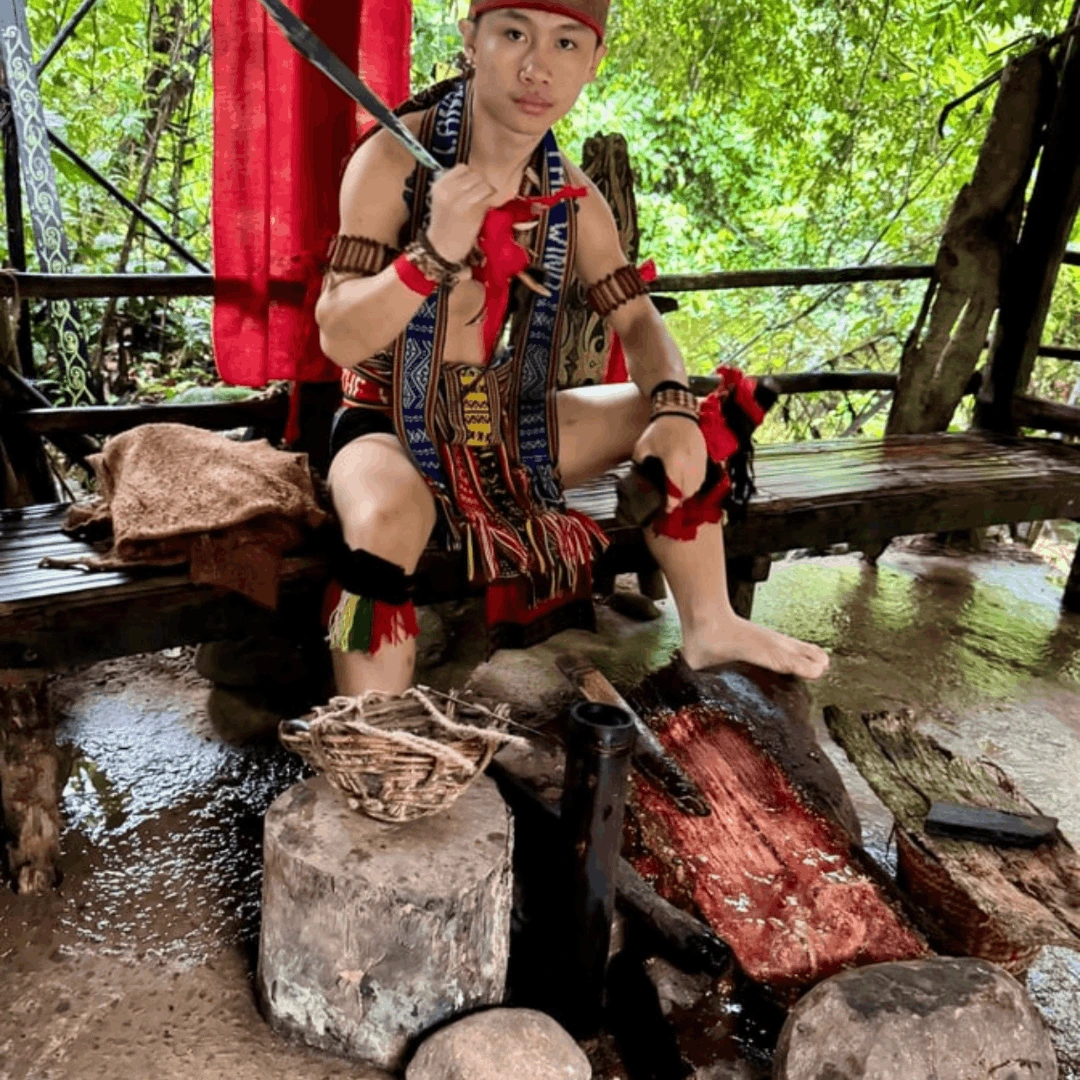
What distinguishes the Lundayeh house at Mari Mari is the remarkable demonstration of tree bark craftsmanship. Before woven cloth was available, the Lundayeh created garments, ropes, floor coverings, and wall panels entirely from the processed inner bark of certain forest trees. The technique involves soaking, beating, and softening the bark until it becomes pliable enough to be shaped and stitched into practical forms. Visitors watch this process live and can examine finished pieces that range from simple rope to elaborate vest-like garments.
The Lundayeh house also introduces the blowpipe tradition. The blowpipe, called a sumpit, was used both for hunting and in conflict, typically loaded with darts coated in poison derived from the Ipo tree. Visitors are shown the mechanics of the weapon and, in some tour versions, invited to try shooting it at a target.
4. The Bajau: Cowboys of the East and Sea Gypsies
The Bajau occupy a unique double identity in Sabahan culture. The inland Bajau of Kota Belud are horse riders, known throughout Malaysia as the Cowboys of the East, and celebrated each year in the Kota Belud Tamu Besar festival for their spectacular mounted displays. The coastal Bajau Laut of Semporna, by contrast, are maritime people, the so-called Sea Gypsies of Southeast Asia, who were historically so adapted to life on the ocean that they reportedly spent more time on boats than on land and have evolved physiological adaptations that allow them to free-dive to extraordinary depths.
The Bajau people originally arrived in Sabah from the Philippines and Sulawesi approximately 500 years ago, eventually establishing themselves as the second largest ethnic group in the state.
At the Bajau house in Mari Mari, the atmosphere is notably different from the other tribal spaces. The interior is richly decorated in the tradition of Bajau wedding preparations, with colourful textiles and ceremonial arrangements. You are introduced to Pandan juice, a refreshing drink made from screwpine leaves, and you watch the preparation of Kuih Jala, a delicate, lacy coconut rice pancake that is fried on the spot. The Bajau house has a distinctly festive energy, reflecting a community known for elaborate ceremonies and colourful celebrations.
5. The Murut: The Last Headhunters of Borneo
The Murut are the third largest indigenous group in Sabah, and they were historically the last tribe in the entire region to officially abandon the practice of headhunting, which they did under pressure from colonial administration in the early twentieth century.
The history of Murut headhunting, as explained at Mari Mari, is more nuanced than the word alone suggests. There were two distinct contexts for the practice. The first was a rite of masculine honour: a warrior seeking to marry would be required to prove his worth to his prospective wife’s family by returning with the head of an enemy in combat. The second was territorial conflict, where the display of collected skulls served as a deterrent to rival groups. While the practice is long gone, its legacy shapes how the Murut understand their own history of courage and community protection.
At the Murut longhouse, visitors encounter the Lansaran, a traditional floor structure built from flexible timber that creates a natural trampoline effect when multiple people jump on it in unison. The Lansaran was historically used in victory celebrations, with warriors competing to see who could jump the highest. Visitors are enthusiastically invited to try it, and it is one of the most genuinely joyful moments of the entire tour.
The Murut house also features live demonstrations of blowpipe making and the traditional tattooing method, done with a hand-tapping technique using natural pigments. Visitors who want a temporary tattoo in the old style can request one.
Hands-On Activities Throughout the Tour
One of the strongest aspects of the Mari Mari experience is that you are never simply an audience. The guides encourage participation at every stop, and the things to do in KK are designed to give you an actual physical understanding of traditional skills, not just a verbal description of them.
During the course of the tour, you can expect to try or witness the following:
Bamboo fire-making at the Rungus house, using friction to generate an ember from a dry bamboo stick. This is a test of patience and technique, and the guides are patient teachers.
Blowpipe shooting, where you load a dart and fire at a target. The mechanics of the sumpit are simple, but the accuracy required is humbling.
Montoku (rice wine) tasting at the Kadazan-Dusun house, along with a brief overview of the fermentation process using traditional bamboo vessels.
Honey tasting from the Rungus stingless bee colonies, with an explanation of how the hives are maintained using traditional methods.
Pandan juice and Kuih Jala preparation at the Bajau house, where you watch the lacy pancake being fried and can taste it fresh from the pan.
Lansaran jumping at the Murut longhouse, the communal trampoline floor that produces genuine delight in virtually every visitor.
Temporary traditional tattooing at the Murut house, for those who want a hands-on encounter with one of Borneo’s oldest art forms.
Tree bark craft demonstrations at the Lundayeh house, showing how forest materials were processed into practical textiles and building components.
The Cultural Performance and Meal
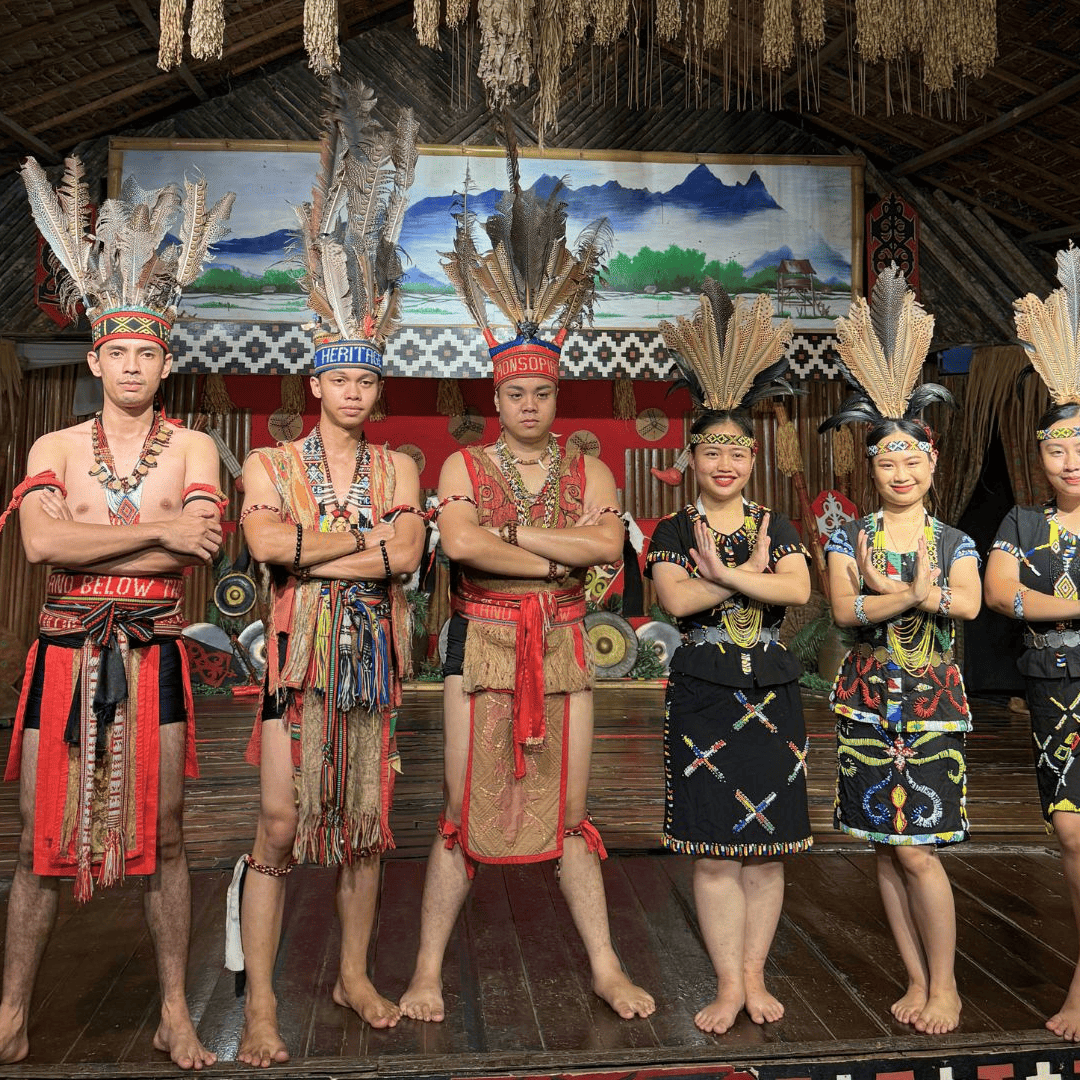
After the walking tour of all five tribal houses, every session concludes with a cultural performance staged in a dedicated open-air pavilion. The performance brings together traditional dances, music, and ceremonial costumes from multiple Sabahan communities.
The highlight for many visitors is the Magunatip, also called the Bamboo Dance, in which performers weave and step between rhythmically clapped bamboo poles at increasing speed. Watching someone do it is impressive; attempting it yourself is chaotic and wonderful.
A fire-blowing performance is also typically included, and the combination of live music, costumed performers, and the rainforest backdrop makes for a genuinely spectacular close to the tour.
Following the performance, a buffet meal is served in a traditional setting. The food reflects the culinary traditions of the communities you have just visited. Dishes typically include Hinava, a Kadazan-Dusun raw fish preparation marinated with lime juice, bitter gourd, and torch ginger, comparable in technique to a ceviche. Pinasakan, a preserved fish dish, is another common offering, along with rice cooked in bamboo and various local side dishes. The food is functional and culturally authentic rather than refined restaurant cooking, and it is served in a quantity that more than satisfies after a morning or afternoon of walking.
Reviewers consistently note that the meal is a pleasant ending to the experience, though most say the highlight is the tour itself and the performance rather than the food specifically.
What Visitors Say About Mari Mari Cultural Village
Looking across hundreds of reviews from Tripadvisor, Viator, Klook, and travel blogs, several themes emerge consistently.
The quality and knowledge of the guides is the most frequently praised elements of the experience. Visitors regularly name specific guides by name in their reviews and describe them as knowledgeable, enthusiastic, and genuinely passionate about sharing their cultural heritage. English proficiency among guides is generally described as excellent, making the experience accessible for international travellers without language barriers.
The authenticity of the setting also draws strong praise. Multiple reviewers note that despite being a tourist attraction, it does not feel commercial or performative. The fact that the houses are built by actual descendants of the represented communities using traditional techniques gives the experience a credibility that distinguishes it from more theatrical cultural shows.
The interactive elements, particularly the Lansaran at the Murut house and the fire-making at the Rungus house, consistently generate the most enthusiastic comments.
On the critical side, some visitors have noted that during peak periods, guide-to-visitor ratios can feel stretched, leading to waiting time between sessions. Booking during off-peak periods and arriving at the start of a session rather than mid-tour minimises this.
Rain does happen, since this is a tropical rainforest, but reviewers almost universally report that it does not ruin the experience. Many describe the rain as adding to the atmosphere.
Food and Drink Highlights at the Village
Beyond the buffet meal at the end, food and drink is woven throughout the tour at each tribal house. By the time you reach the performance and main meal, you will already have tasted rice wine, honey, Pandan juice, and Kuih Jala.
Here is a quick guide to the edible highlights you will encounter:
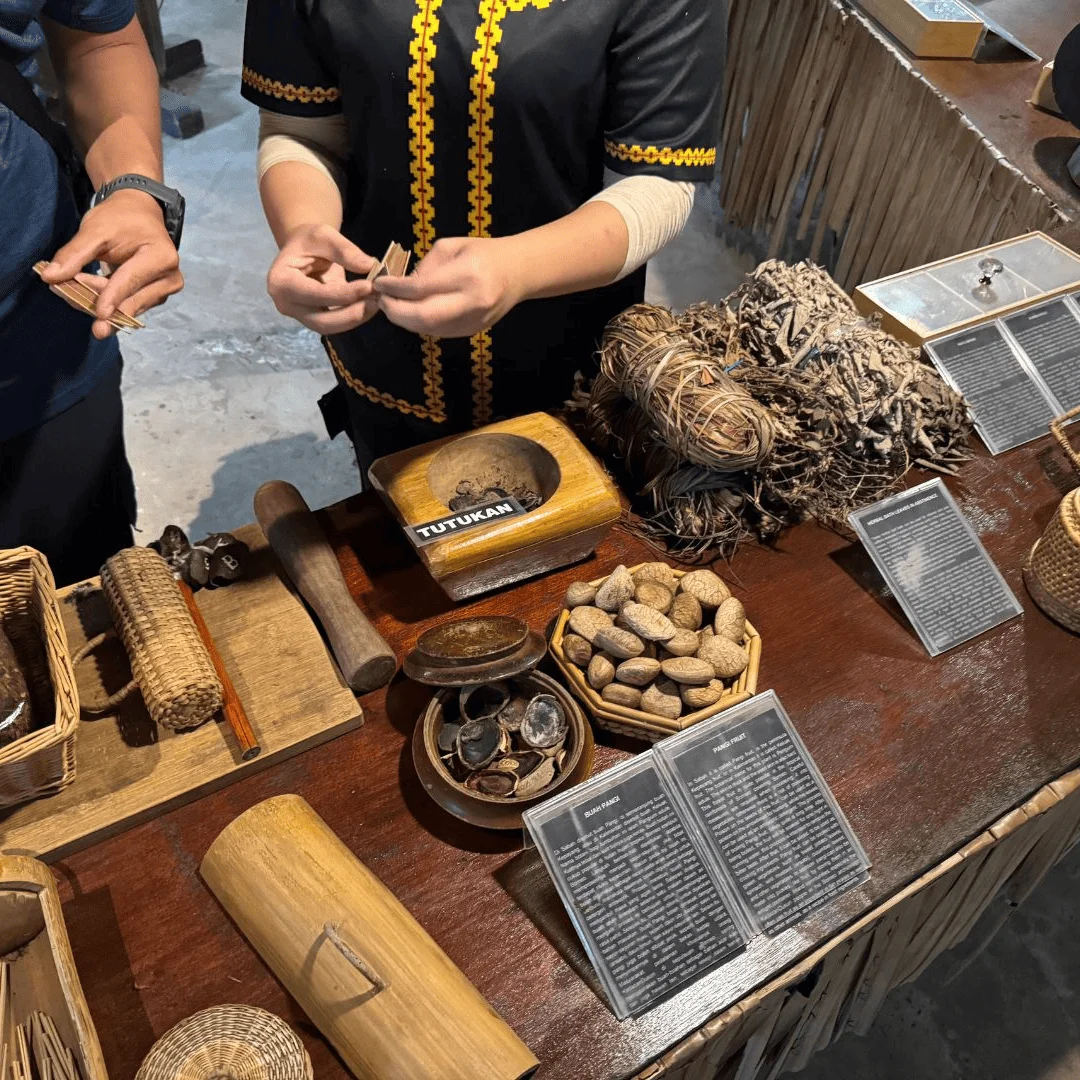
Montoku / Lihing (Kadazan-Dusun rice wine): Fermented from glutinous rice using a natural yeast catalyst called sasad. Mild and slightly sweet, low in alcohol, and traditionally served at every important celebration.
Rungus forest honey: Produced by stingless bees (Meliponini) maintained in traditional log hives. Tangier is more complex in flavour than conventional honey due to the diverse forest flora.
Pandan juice (Bajau): Made from screwpine leaves, which give it a green colour and a distinctive grassy, slightly vanilla-like flavour. Refreshing in the tropical heat.
Kuih Jala (Bajau): A coconut milk pancake poured through a perforated mould to create a delicate lace pattern, then folded and served. Crispy, subtly sweet, and satisfying.
Hinava (buffet, Kadazan-Dusun): The signature Sabahan raw fish salad, made with fresh mackerel cured in lime juice and combined with bitter gourd, grated ginger torch flower buds, and chilli. Light, acidic, and distinctive.
Pinasakan (buffet, Kadazan-Dusun): A preserved fish preparation simmered with asam keping (dried tamarind slices) and turmeric. Rich, tangy, and deeply savoury.
Bamboo-cooked rice: Rice steamed inside bamboo segments over an open fire. The bamboo imparts a subtle, clean fragrance that distinguishes it from conventionally cooked rice.
Practical Visit Tips
Book in advance without exception. Walk-in bookings are not accepted. The village operates on scheduled sessions, and popular time slots fill up, particularly during school holidays, public holiday periods, and the peak tourist months of June through August.
The morning session is generally preferable. Temperatures are cooler, the light for photography is better, and you have the rest of the afternoon free for other activities in and around Kota Kinabalu. The afternoon session is equally valid but ends in the early evening.
Wear covered, comfortable walking shoes. The paths between houses run through genuine rainforest terrain and can become muddy after rain. Flip-flops will make you miserable on a wet day. Lightweight trail shoes or sturdy sandals with grip are ideal.
Dress modestly and comfortably. There is no formal dress code, but light, breathable clothing is strongly recommended given the tropical humidity. Long trousers or lightweight pants are preferable to very short shorts out of respect for the cultural context, though shorts are not prohibited.
Bring insect repellent. You are in a rainforest. Mosquitoes are present, particularly during the late afternoon session.
Bring a hat and sunscreen. Parts of the tour are exposed to direct sun, and the tropical UV intensity is significant even on overcast days.
Bring a camera or ensure your phone is fully charged. Each tribal house offers exceptional photographic opportunities. Always ask your guide or check whether photography of specific items or demonstrations is appropriate before shooting.
Bring some cash for the souvenir shop. The village has a small craft shop near the exit selling locally made bead necklaces, handwoven textiles, traditional snacks, and other items made by community members. The prices are reasonable and the purchase supports the families involved in the village.
Allow time for tips. Guides at Mari Mari work hard, are genuinely knowledgeable, and consistently exceed visitor expectations. Tipping is not mandatory but is very much appreciated and culturally appropriate.
Avoid late September and early October if possible. Several reviewers note that this period coincides with particularly heavy afternoon rain in the Inanam area, which makes the outdoor walking sections more challenging.
Best Time to Visit Mari Mari Cultural Village
The dry season in Sabah runs roughly from March through October, and this is the most comfortable period for any outdoor activity in the region, including a visit to Mari Mari. Mornings throughout the year are generally the driest part of the day in the KK area.
The wet season runs from November through February, with the heaviest rainfall typically in December and January. Tours do continue during this period and the village does not close due to rain unless conditions are severe, but the paths can become slippery and the overall experience is more comfortable in dry conditions.
If your travel dates are flexible, March through May and July through September offer the most consistently dry weather, combined with good availability at the village.
The major Sabahan festival season, particularly around the Kaamatan Harvest Festival in May and early June, is an excellent time to visit the region generally if you want to see Kadazan-Dusun culture in its fullest celebratory form across the whole state, though this is also a busy period for tourism in Kota Kinabalu.
Who Is Mari Mari Cultural Village Suitable For?
The experience is genuinely suited to a wide range of visitors. Families with children consistently rate it as one of the best activities they did in Kota Kinabalu, particularly because of the hands-on elements like fire-making, blowpipe shooting, and the Murut trampoline floor. The pace of the tour is unhurried, guides are comfortable explaining things at a level that children can follow, and the food tastings throughout keep energy up.
Solo travellers and couples find it equally rewarding, particularly those with an interest in indigenous cultures, anthropology, or simply a desire to understand the place they are visiting beyond its beaches and skyline.
Group travellers and corporate tour groups can arrange private sessions through the village, which offer a more personalised pace and the option to linger longer at particular houses.
Those with limited mobility should note that the terrain between tribal houses involves uneven jungle paths and some steps, and the experience is not fully accessible for wheelchairs. The village recommends contacting the reservation team in advance to discuss arrangements.
Travelling to Kota Kinabalu and looking for more expert guides on what to see, where to stay, and how to plan your trip? Explore more destination content at citympvtravel.com.
How Mari Mari Cultural Village Supports Cultural Preservation
The village is far more than a tourism business. Employing community members as guides, craftspeople, performers, and kitchen staff, it provides sustainable livelihoods directly tied to the continuation of traditional practices.
The traditional houses themselves require regular maintenance using authentic techniques and materials. Each time a house is repaired or rebuilt, the knowledge of traditional construction methods is passed on to a younger generation that might otherwise never learn it. The same applies to the skills demonstrated during tours: blowpipe making, bark cloth processing, firemaking, and beadwork are not practices that survive in everyday modern Sabahan life, but they continue to be known, taught, and performed because of the village.
The Sabah Tourism Board recognises Mari Mari as a key cultural heritage destination, and the village is positioned in the national tourism strategy as a model for how living cultural tourism can simultaneously generate income and prevent the loss of intangible heritage.
When you buy a tour ticket, book a package, tip your guide, and purchase something from the craft shop, you are directly participating in that preservation effort.
Nearby Attractions to Pair With Your Visit
Since Mari Mari is located northeast of KK in the Inanam corridor, several other worthwhile destinations can be combined with a visit on the same day or during the same trip.
Kiansom Waterfall sits approximately 400 metres beyond the cultural village and offers a beautiful swimming spot in a forested setting. It is an ideal post-tour cool-down for those with private transport.
Monsopiad Cultural Village, located about 15 kilometres south of central KK near Penampang, offers a deeper and somewhat darker exploration of Kadazan-Dusun heritage specifically. Named after a legendary Kadazan warrior, it is known for the House of Skulls, which contains 42 genuine human skulls historically collected by Monsopiad himself. The experience is intense but historically significant, and it complements rather than duplicates the Mari Mari experience.
Sabah State Museum, located in the city centre about 2 kilometres south of KK’s downtown, provides excellent contextual background on Sabah’s indigenous cultures through traditional attire, historical artefacts, and cultural displays. Visiting the state museum of Sabah before or after Mari Mari enriches both experiences.
Sabah Traditional Authentic Cuisine Cooking Class with Aunty Cindy is a highly rated standalone experience in Penampang, where you can prepare dishes like Hinava and Linopot under proper instruction. For food-focused travellers, this extends the culinary thread that Mari Mari introduces.
Essential Information Summary
Location: Kionsom, Inanam, Kota Kinabalu, Sabah
Distance from KK city centre: Approximately 25 km
Tour times: 10:00 AM and 2:00 PM daily (collection from KK hotels from approximately 09:00 and 13:00 respectively)
Admission: From approximately MYR 120 per person (Malaysian rate, without transfer); international visitor and package rates vary
Booking: Advance booking required; no walk-in bookings accepted
Contact for reservations: +6013 881 4921 (Reservation Team)
Official website: marimariculturalvillage.my
Tour duration: Approximately 3 to 3.5 hours, including performance and meal
What is included (tour package): Village tour, English-speaking guide, cultural performance, one meal (lunch or high tea, depending on session), and return hotel transfer from central KK
What to bring: Comfortable walking shoes, light breathable clothing, hat, sunscreen, insect repellent, a camera, cash for tips, and a souvenir shop
Suitable for: All ages, families with children, solo travellers, couples, groups
Best time to visit: March through October for dry weather; morning sessions for cooler temperatures
Conclusion:
There is a particular kind of travel experience that stays with you long after the surface memories of beaches and city streets have blurred together. Mari Mari Cultural Village is that kind of experience for Kota Kinabalu.
It teaches you things you did not know about a part of the world that is genuinely unlike anywhere else, through the voices of people who have inherited those traditions directly. You leave knowing not just the names of the five major indigenous communities of Sabah, but something real about how each of them lived, what they valued, what they feared, what made them celebrate, and what skills they developed in response to the specific demands of Borneo’s extraordinary natural environment.
For any visitor to Kota Kinabalu spending more than a single day in the city, a morning or afternoon at Mari Mari Cultural Village is the single best use of half a day you will find within 30 minutes of a city hotel. Book in advance, wear comfortable shoes, arrive with curiosity, and let the guides do what they are genuinely excellent at.