

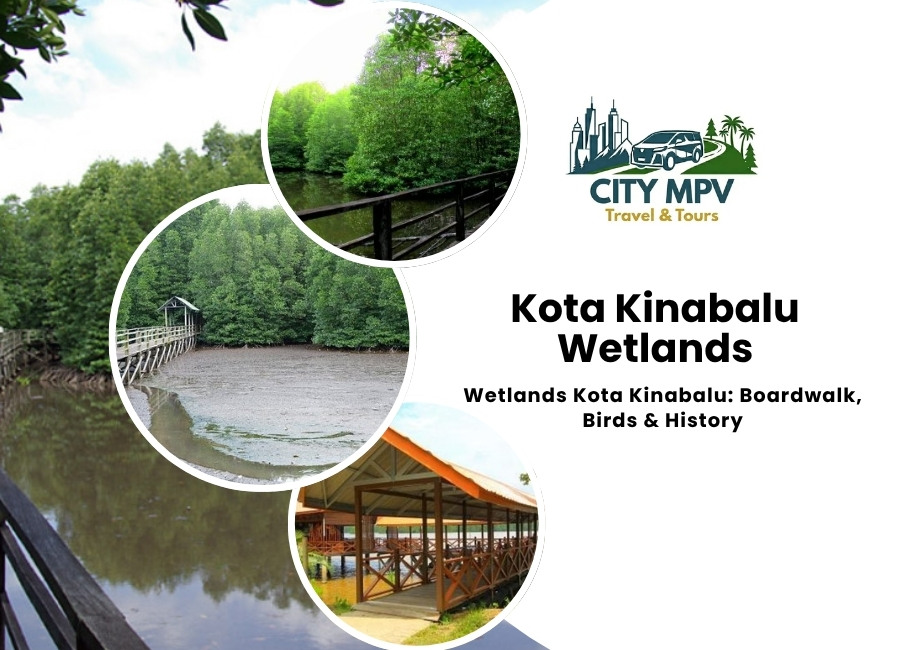
Most visitors picture Kota Kinabalu as a city of beaches, islands, and busy waterfront markets. Few expect to find a genuine mangrove forest tucked just minutes away from the city center. Yet that is exactly what the Kota Kinabalu Wetlands offers.
Located in Likas, only about two kilometers from downtown, this 24-hectare stretch of mangrove forest is the last significant remnant of the coastal mangroves that once lined the entire Kota Kinabalu shoreline. For anyone curious about Sabah’s natural side without leaving the city, the Wetlands Kota Kinabalu experience is one of the most rewarding half-day trips in Kota Kinabalu.
A Brief History of Kota Kinabalu Wetlands
The area was once known simply as Likas Swamp or Likas Mangrove. In the mid 1990s, environmentalists and birding enthusiasts noticed the mangrove was under threat from encroachment and illegal settlement.
They lobbied the Sabah state government, and in 1996, the area was officially declared a bird sanctuary under the Land Ordinance. It was later given further protection as a Cultural Heritage Site in 1999.
By 2006, during World Wetlands Day celebrations, the site was renamed Kota Kinabalu Wetlands. The name change reflected a broader conservation goal, shifting focus from birds alone to the entire wetland ecosystem. Today it is managed by the Sabah Wetlands Conservation Society and continues to serve as a conservation area, an education center, and a public recreation space all at once.
What Makes the Wetlands Ecosystem Special
Mangrove forests like this one play a role that goes far beyond scenery. They stabilize coastal sediment, filter out toxins, and prevent saltwater from contaminating nearby freshwater supplies.
They also act as a nursery for marine life, protected under Sabah’s Fishery Department regulations. Without wetlands like this one, much of the coastal ecosystem around Kota Kinabalu would look very different today.
Exploring the Boardwalk
The centerpiece of any visit is the 1.5-kilometer wooden boardwalk that winds through the mangrove swamp. Walking the full loop takes around 45 minutes at a relaxed pace.
Along the way, visitors pass through dense stands of Rhizophora mangrove trees, some of which were replanted through past conservation efforts. The boardwalk also connects to an outdoor classroom, a bird hide, and an observatory tower, giving visitors a raised vantage point over the swamp.
Inside the visitor center itself, there is a small exhibition hall covering Ramsar wetland sites, local flora and fauna, and the water cycle, along with a library and an audio-visual room for those who want a deeper introduction before heading out onto the trail.
Birdwatching at Kota Kinabalu Wetlands
For birdwatchers, this site is something of a local treasure. More than 80 species of birds have been recorded here, including both resident species and migratory visitors arriving from as far as Northern Asia.
The best time to spot migratory birds is during the northern winter season, roughly between September and March. Common sightings include the little egret, striated heron, and various species of sandpiper, along with raptors such as the Brahminy kite.
Wildlife Beyond the Birds
Birds may be the main attraction, but they are far from the only wildlife in Kota Kinabalu. Walking the boardwalk, it is common to spot monitor lizards, mudskippers skipping across the mud flats, fiddler crabs, and even the occasional water snake.
Butterflies and weaver ants are frequently seen along the trail as well, adding a bit of color to the greenery. The mix of land and water habitats packed into such a small area is part of what makes this wetland ecosystem so ecologically rich.
Why Visit Kota Kinabalu Wetlands
For travelers with limited time in Sabah, this is one of the easiest ways to experience genuine mangrove nature without a long drive out of the city. It works well as a quiet morning activity before an afternoon of city sightseeing, and it also makes for an easy addition to an existing Kota Kinabalu itinerary.
Advance notice is recommended for guided walks, though self-guided visits along the boardwalk are also available for those who prefer to explore independently.
Let’s Plan Your Visit to Kota Kinabalu
The centre is located on Jalan Bukit Bendera Upper in Likas, close to Likas Square and within reach of the city centre by taxi or e-hailing service. Comfortable walking shoes and light clothing are recommended, along with insect repellent, since the mangrove environment does attract mosquitoes, especially in the early morning and late afternoon.
For travelers who want to combine a wetlands visit with other Kota Kinabalu highlights such as the Kota Kinabalu Floating Mosque, historic Australia Place, or the local handicraft markets,
City MPV Travel and Tours offers a well-organized Kota Kinabalu city tour that includes nature stops like this one alongside the city’s cultural landmarks. It is a convenient way to see both sides of Kota Kinabalu, the urban and the natural, in a single well-planned day. You can check the itinerary and booking details on our Kota Kinabalu City Tour page.